
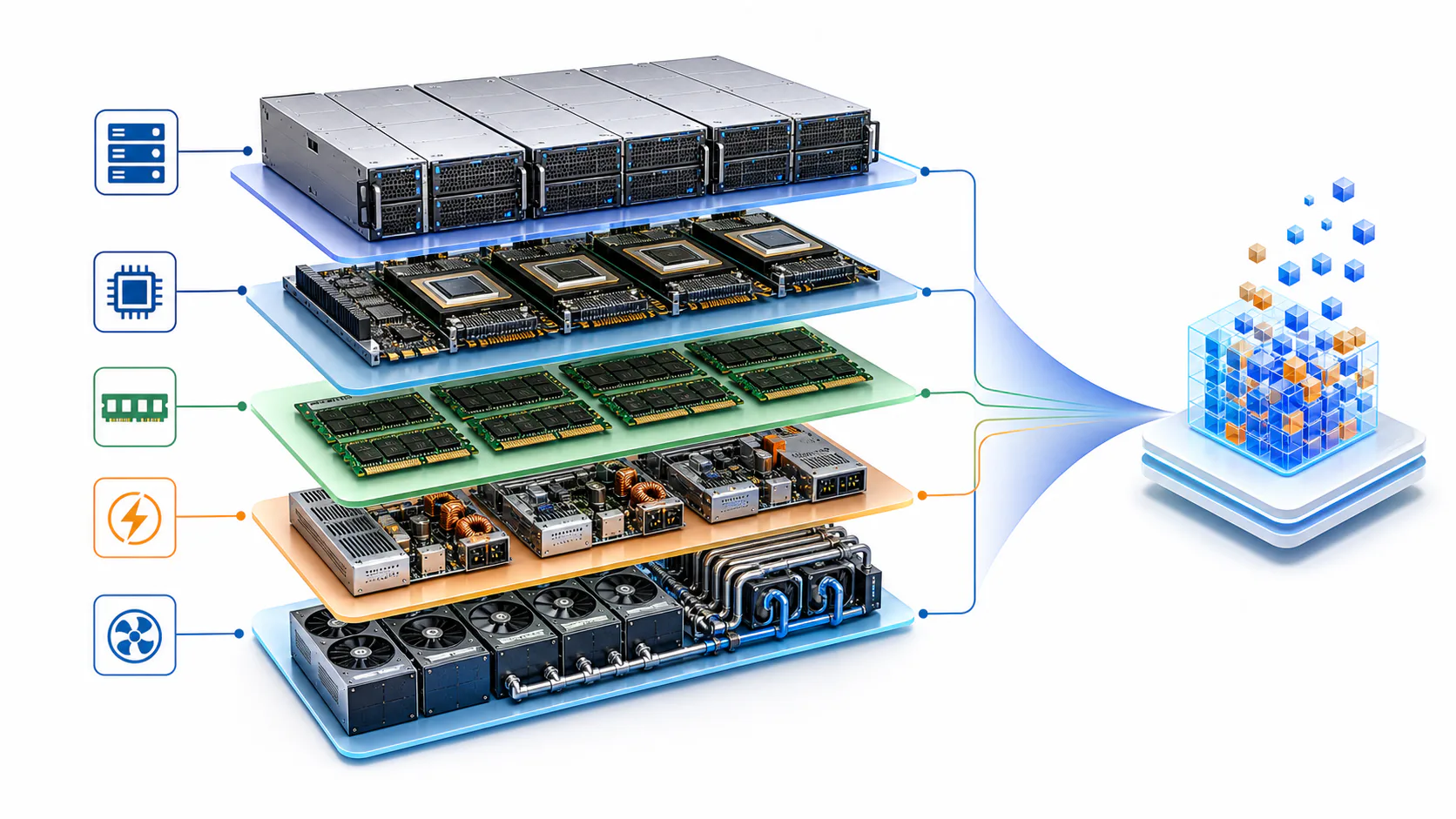
When an AI service begins charging for usage, it is tempting to explain the change with expensive chips. Hardware matters, but token economics include far more than the accelerator purchase price.
Serving a model consumes compute time, memory bandwidth, networking, power, cooling, storage and operations. Utilization and software efficiency decide how much of that infrastructure cost reaches each request.
Procurement teams should treat service pricing as a demand signal, not direct evidence that every AI-related component is scarce.
The accelerator is one layer
Training and inference use different hardware profiles. Large training clusters emphasize accelerator scale and network fabric. Inference can range from high-end GPUs to specialized ASICs, CPUs and edge devices depending on latency, model size and volume.
A provider may raise prices because demand exceeds deployed capacity, because a promotional subsidy ended or because the product mix changed. None of those explanations identifies a specific constrained MPN.
Buyers need deployment and supply evidence before translating a service price into inventory action.
Memory and networking shape throughput
Accelerators depend on high-bandwidth memory, host DRAM, storage and fast interconnects. A system can be compute-rich and still underutilized because data cannot move quickly enough.
This creates selective demand for memory, optical modules, network switches, retimers, connectors and power components. The effect is not uniform. A commodity part on a management board may see little pressure while a qualified high-speed component tightens.
Map components to the actual server architecture and build schedule rather than the word “AI.”
Power delivery is a complete BOM
High-current processors require voltage regulators, controllers, power stages, inductors, capacitors, current sensing and protection. Facility power adds conversion, backup and cooling loads.
Suppliers such as Texas Instruments and others participate across this stack, but a broad portfolio does not mean every device shares the same demand. Track the exact rail, current class, package and qualification.
Thermal design and power density can make a technically available alternate unusable without layout or cooling changes.
Utilization can change demand faster than silicon
Model optimization, batching, quantization and scheduling can increase tokens per installed accelerator. Better utilization can absorb demand without proportional hardware growth. Conversely, latency guarantees and idle capacity can raise infrastructure cost even when chips are available.
This is why service price and semiconductor spot price should not be treated as one curve.
A buyer’s signal framework
Watch confirmed server shipments, supplier lead times, allocation notices, authorized inventory and platform design wins. Separate accelerator, memory, networking, power and cooling exposure.
For at-risk parts, qualify alternatives around the system interface and thermal envelope. For broad commercial components, avoid buying ahead solely because an AI application changed its subscription model.
The procurement conclusion
Paid AI makes infrastructure cost visible, but it does not identify a universal chip shortage. The supply-chain opportunity is concentrated where compute architecture, qualification and capacity intersect.
Buyers should follow build schedules and MPN evidence. A token is a unit of service; it is not a component-market index.
This article is supply-chain analysis and does not forecast service or semiconductor prices.