When comparing EYANG and VIYONG, the most useful question is where their capacitors are intended to sit in a circuit. The answer lies in the specifications. High-capacitance decoupling on AI boards, resonant capacitors in automotive power supplies, and coupling and matching in RF signal chains place very different demands on MLCCs. Capacitance and dimensions matter, but so do loss, temperature rise, assembly and performance over time.
Looking at these specific BOM positions makes both the overlap and the differences between the two suppliers easier to understand.
1. Is fitting 22 μF into 0402 enough? AI decoupling demands more than a small footprint
In its June 2026 exhibition materials, VIYONG highlighted AI-computing applications, listing examples including 0402, 22 μF, 4 V and 0805, 100 μF, 2.5 V. These products target power filtering and decoupling, providing the required capacitance within limited board space.
EYANG is also pursuing high capacitance in smaller packages. Its general-purpose selection guide, effective April 2026, lists a C-series 0402, X5R, 22 μF, 6.3 V option. Both companies therefore offer concrete specification combinations for engineering evaluation.
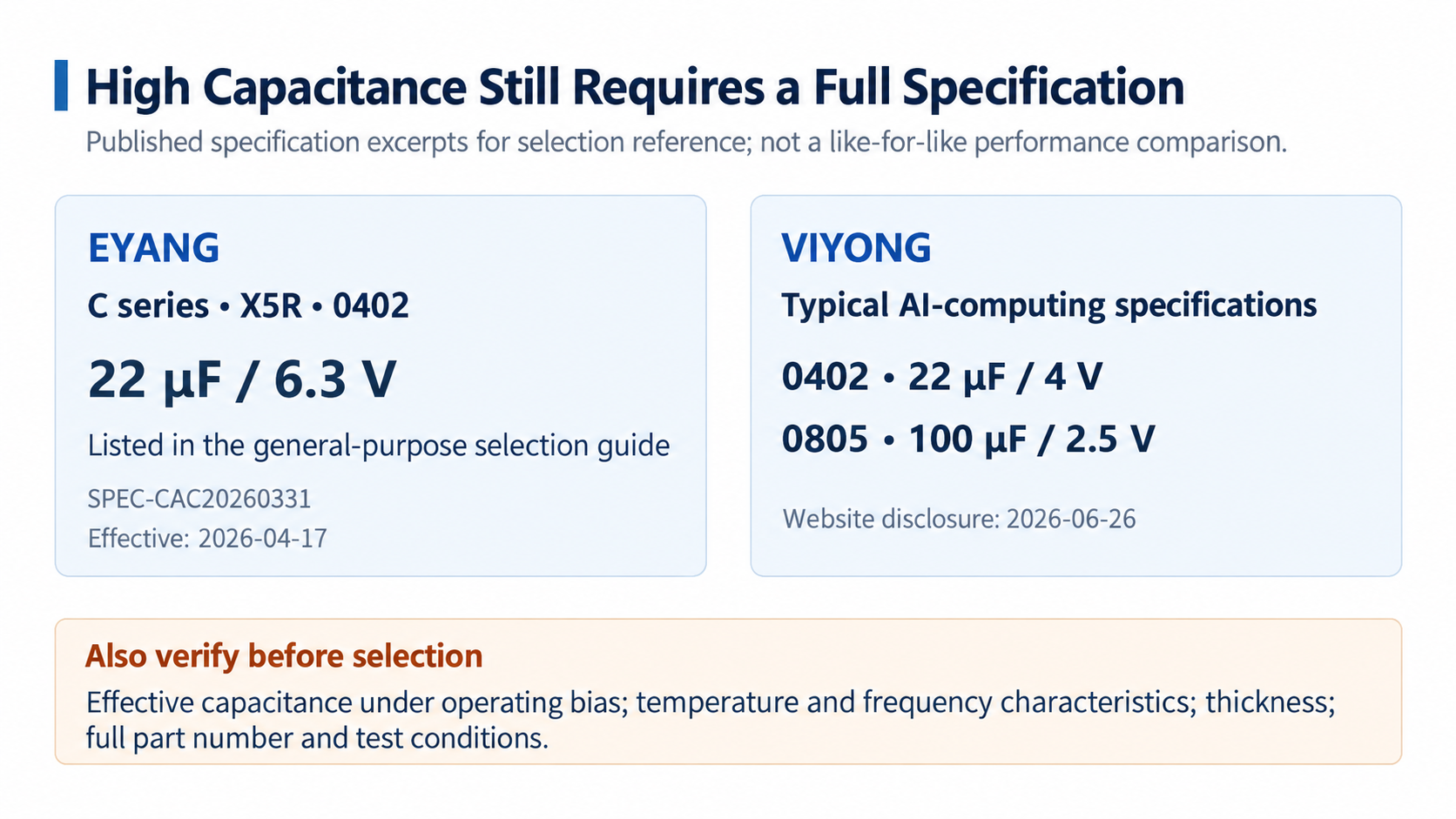
Figure 1. Compiled from EYANG's selection guide and VIYONG's official application materials. The listed specifications have different conditions and do not constitute a performance ranking.
Seeing 6.3 V alongside 4 V naturally raises another question: will the part with the higher rated voltage perform better on the board? A full set of characteristic data is needed to answer that.
The effective capacitance of high-permittivity MLCCs can decrease under DC bias. Temperature, frequency, thickness and measurement conditions also need to be compared together. How much of the nominal 22 μF remains in the actual circuit directly affects design margin.
In 2024, EYANG disclosed its participation in a high-capacitance MLCC development project that included capacitance loss under bias and aging. This illustrates how the manufacturing challenges extend into in-use performance. It does not establish which particular product performs better: that requires data for the relevant part numbers, rather than an inference from a project's name.
Engineers should next obtain characteristic curves under the intended operating conditions and validate samples. For purchasing teams, those results also determine whether two superficially similar capacitors belong on the same candidate list.
2. Automotive capacitors do not all do the same job
Automotive MLCC applications are diverse. Low-voltage decoupling in a domain controller and a resonant branch in an onboard charger both use capacitors, but their selection requirements differ substantially.
VIYONG's materials for the 2026 Beijing Auto Show presented high-capacitance, high-voltage, wide-temperature and soft-termination products. Its online automotive roadmap lists 1210 C0G ranges of 1000 V, 4.7–22 nF and 630 V, 1.5–33 nF, marked as available for volume supply. Engineers can use this to understand product coverage, then confirm exact part numbers and current status with the manufacturer.
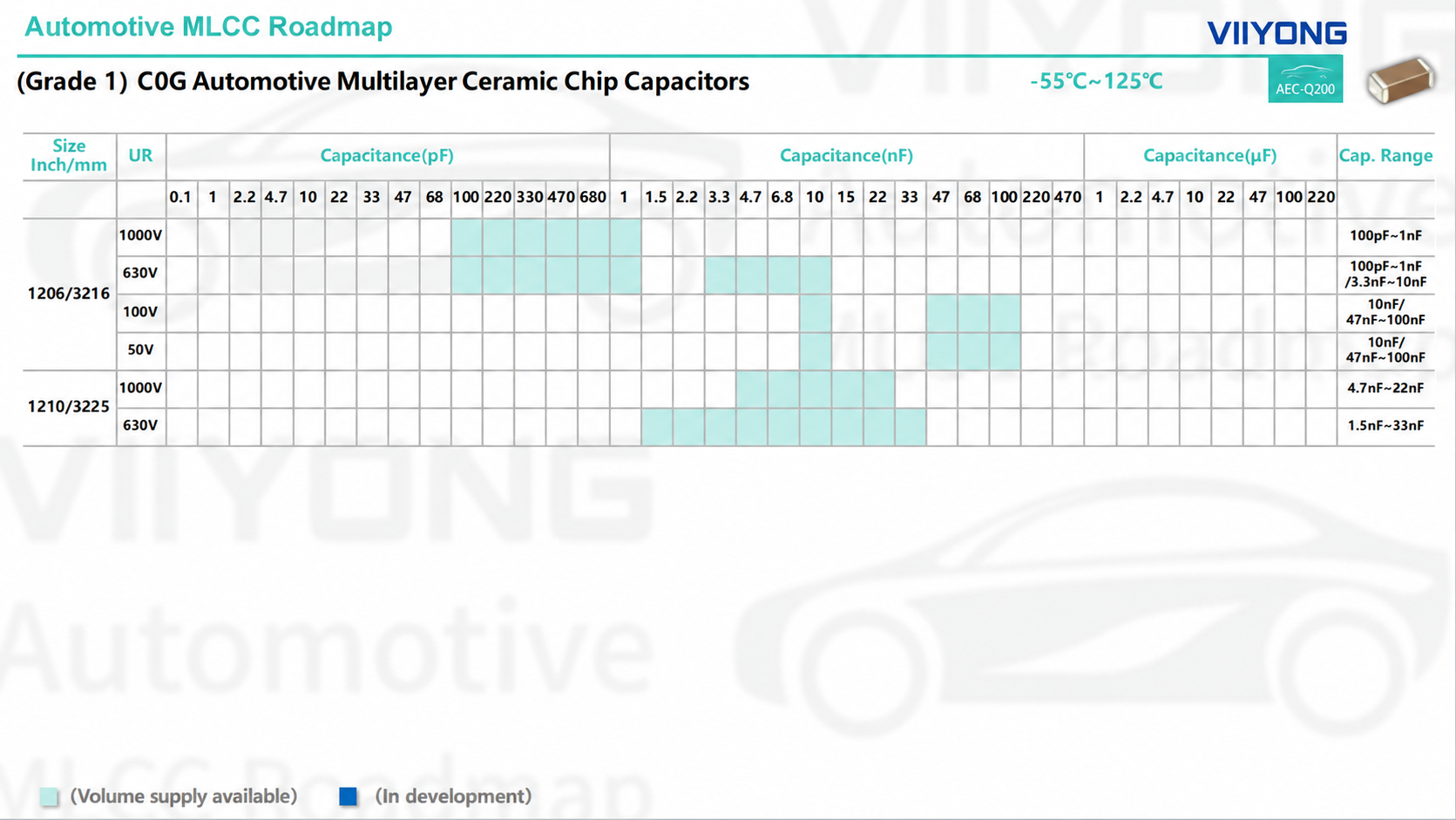
Figure 2. VIYONG's official automotive C0G roadmap, with labels translated into English. The page has no revision date and was accessed on September 9, 2026. Availability is the manufacturer's designation and does not establish adoption by a particular customer.
EYANG's application articles give more detail on resonant capacitors in automotive OBCs. Its automotive C0G resonant series lists rated voltages spanning 630–2000 V, depending on the specification, and emphasizes capacitance stability, low loss and thermal performance.
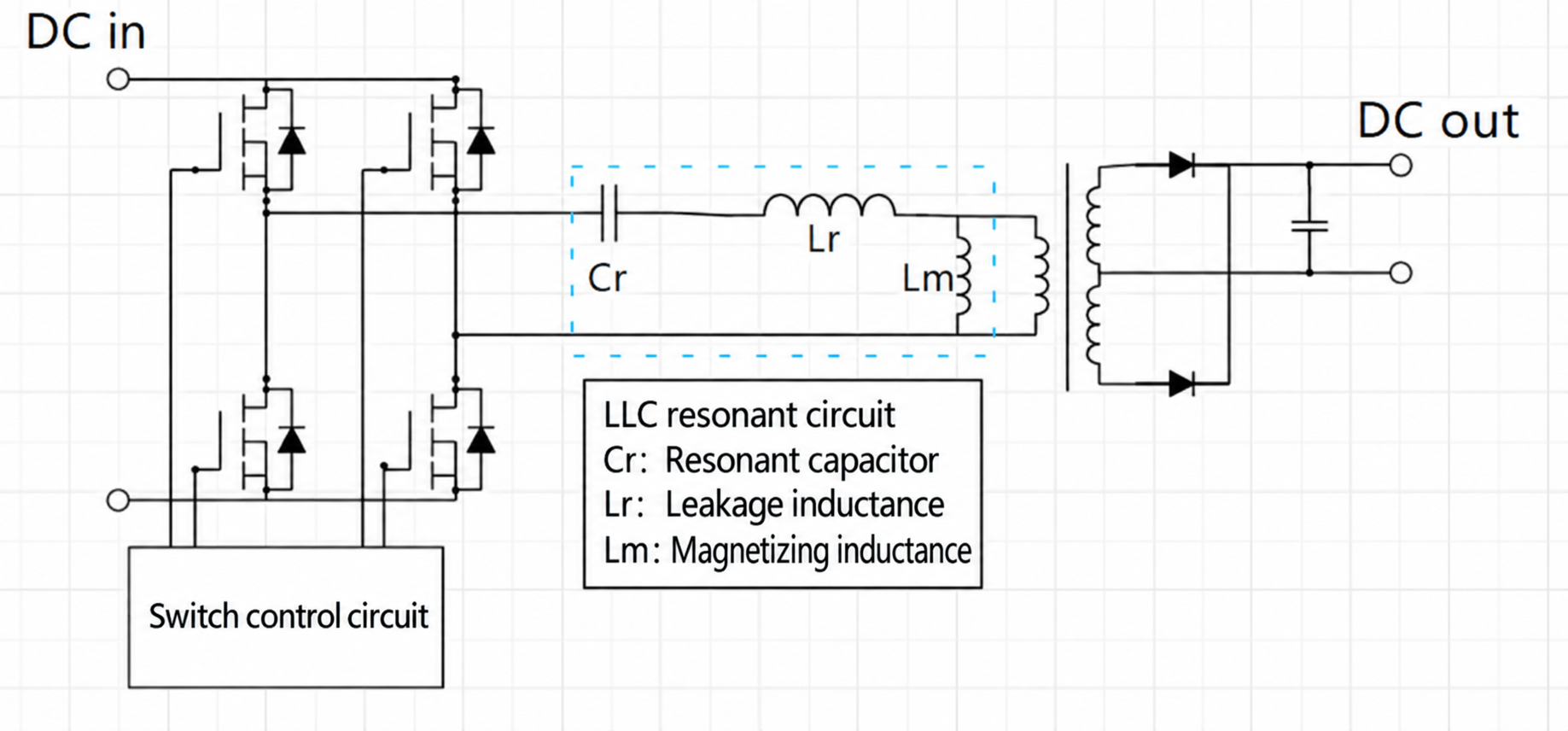
Figure 3. LLC circuit illustration from EYANG's official March 2023 application article, with labels translated into English. Cr is the resonant capacitor. This is not a specific customer's BOM.
AC electrical stress, loss and temperature rise must all be considered in a resonant capacitor. At this circuit position, stable capacitance and controlled heating matter more than capacitance alone. The voltage across the device must be calculated from the circuit; the vehicle platform voltage cannot simply be used as the component's selection criterion.
Both suppliers have also disclosed soft-termination product directions, extending the discussion from electrical performance into assembly and reliability. Termination construction, soldering conditions and relevant tests need to be assessed against the project's requirements.
Purchasing specifications should be particularly explicit here. A single manufacturer's general-purpose, high-voltage and automotive series can offer similar combinations of size and capacitance. Including product grade, termination structure and data-sheet revision in an RFQ reduces the risk of discovering that the wrong series was selected only after samples arrive.
3. Small capacitance does not mean a low technical barrier in RF
Another high-end MLCC category deserves separate attention: pF-range capacitors used for coupling, matching and other RF functions.
EYANG's U-series high-frequency, high-Q selection guide, effective July 2026, addresses phones, routers, power amplifiers and related modules. It lists a 0402, C0G, 100 V range of 0.1–100 pF. Its industrial product introduction also explicitly identifies high-Q series for coupling and impedance matching in base-station transmitters.
Evaluation requires loss, impedance and capacitance accuracy at the target frequency, considered alongside board layout. Similar package dimensions and nominal capacitance do not establish that two products can occupy the same RF circuit position.
VIYONG's recent materials place miniature sizes such as 008004, 01005 and 0201 in chip packaging, RF chips and miniature modules. In these space-constrained applications, miniaturization and high-frequency performance intersect, but suitability still has to be demonstrated for the exact device and circuit.
Even size codes should be aligned before comparison. EYANG's guide maps A8A4 to 008004 and 0105 to 01005; VIYONG's roadmap lists both imperial and metric dimensions. Adding length, width, thickness and packing format to the candidate list improves communication among engineering, purchasing and distribution teams.
The available materials suggest that EYANG explains resonant and high-Q application positions in more detail, while VIYONG's recent presentations emphasize high-capacitance AI applications and miniature components. These emphases help explain their product directions, but overlap remains; they do not establish sharply separated markets.
4. Specifications earn a place on the candidate list; validation earns a place in the BOM
Start by defining a circuit position and asking specific questions: what are the working voltage and temperature, how much effective capacitance is required, and what impedance is needed across the target frequency band? With those conditions established, request full part numbers, data sheets and samples from both suppliers so the comparison has a common basis.
For high-capacitance decoupling, focus on effective capacitance under bias and temperature. For resonant branches, assess electrical stress, loss and temperature rise. For RF positions, examine target-band characteristics and board-level performance. Assembly, reliability and supply documentation can be prepared in parallel.
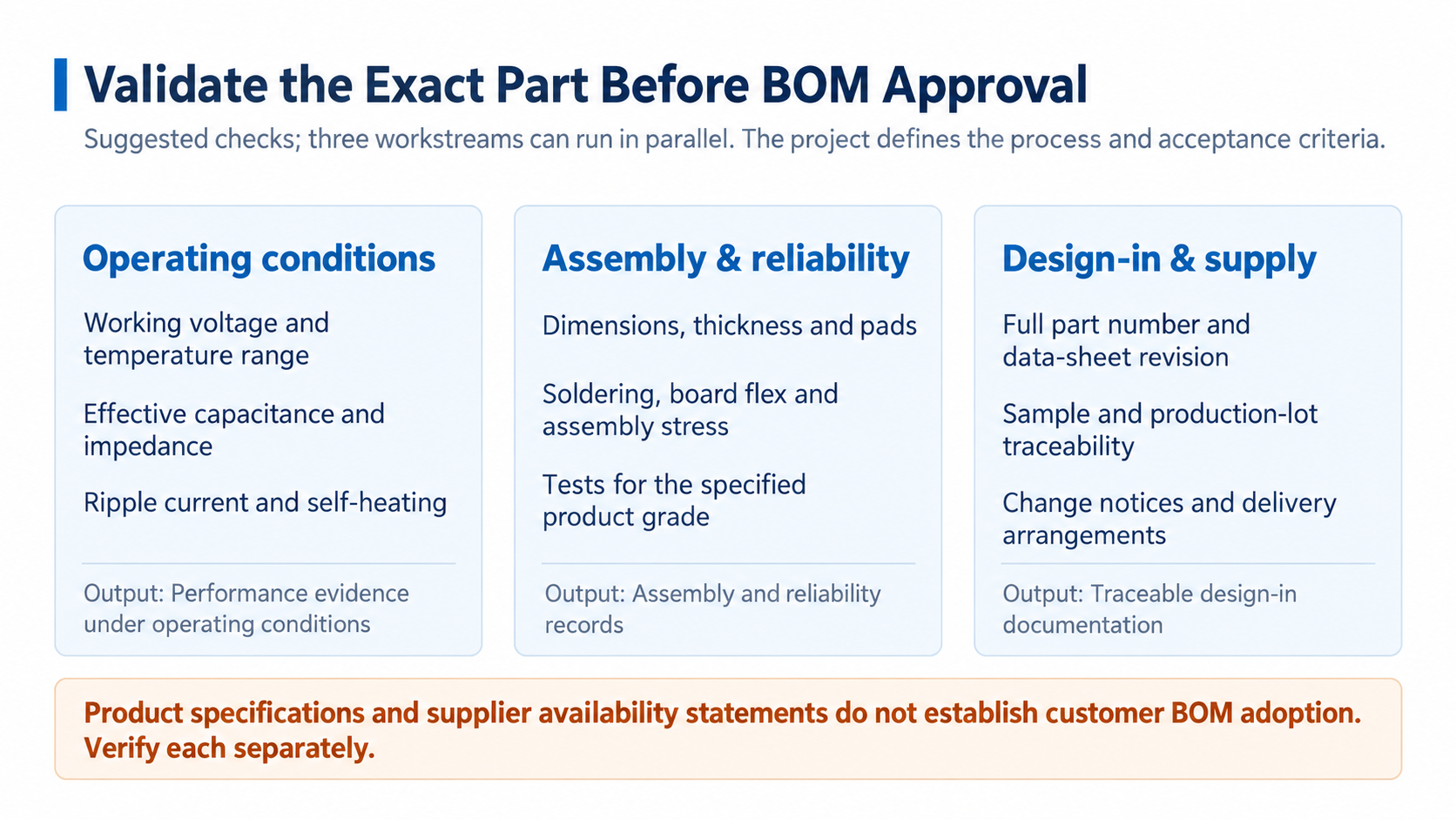
Figure 4. Suggested checks based on the discussion above. The workstreams can proceed in parallel; the project defines the specific acceptance criteria.
A supplier's statement that a specification is available does not mean a customer has completed design-in. Between receiving samples and approving a production BOM lie board-level validation, lot traceability, change management and other work.
For a dual-source project, use the same test board, measurement conditions and acceptance criteria, recording each candidate's results separately. A sample passing one test demonstrates its performance under those particular conditions. Decisions about expanding validation or releasing a part for production must also account for lot consistency and system requirements.
This creates specific opportunities for manufacturers and distributors to support customers: filling gaps in characterization data promptly, following up application issues, maintaining traceability from samples to subsequent lots, and communicating product changes. These practical steps help customers move design-in forward.
EYANG's and VIYONG's move into higher-value MLCCs is already visible in their products and application directions. What deserves closer attention next is which supplier can substantiate in-use performance, validation evidence and delivery arrangements for those BOM positions. That is the basis on which a customer keeps a candidate part in a project and continues its qualification.
Disclaimer: This article is an industry analysis based on public materials, not a purchasing or part-number recommendation. Confirm specific parameters, availability and design-in status with the manufacturer and customer using the latest information.