
Thermistors, varistors and adjustable resistors: a guide to Chinese suppliers
A power board may contain a temperature sensor beside a hot component, a disc that limits switch-on current, another disc that suppresses a voltage surge, and a small screw-adjusted part used during factory calibration. Their resistance changes for different reasons, and their supplier requirements follow those differences.
For international engineers and sourcing teams assessing mainland Chinese manufacturers, it helps to separate the sensing element, the packaged component and the completed assembly. A thermistor supplier may also make cable probes or automotive heaters. A varistor supplier may offer several other protection technologies. A potentiometer supplier may extend into position sensing. Those activities cannot all be counted as sales or capacity of the same discrete resistor category.
This article follows the products used for temperature sensing, inrush limiting, protection and adjustment, then maps them to the mainland suppliers discussed in the Chinese edition. Taiwan-based companies appear separately as reference points.
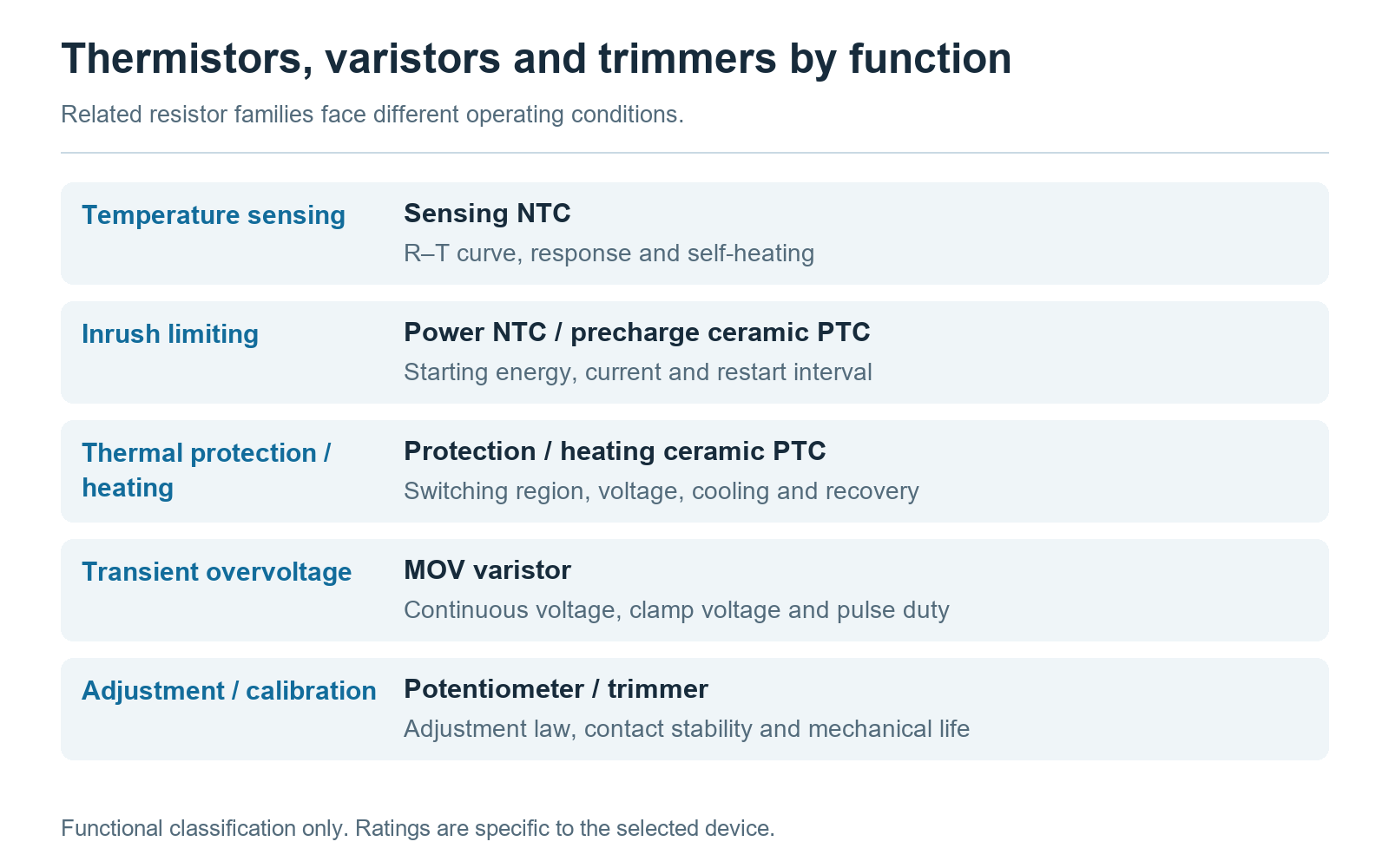
Figure 1. Product groups organized by circuit function. One component category may serve several applications; individual series have their own operating conditions.
1. NTC thermistors serve sensing and inrush limiting
NTC means negative temperature coefficient. Resistance decreases as temperature rises within the specified operating range. A sensing circuit converts that resistance change into temperature information. A power NTC uses self-heating after switch-on to move from a relatively high initial resistance to a lower operating resistance.
These uses place different demands on the device. A temperature sensor should minimize self-heating error. An inrush limiter must absorb the starting energy and balance residual resistance against ongoing power loss. The underlying temperature characteristic is related, but the operating conditions and design objectives differ.
Sensing NTCs come in epoxy-coated, glass-encapsulated and chip forms, as well as cable probes. A glass element can be installed in a metal tube or another enclosure with cable, connector and potting material. The finished probe adds mounting, insulation, moisture protection and a thermal path, all of which can change response time.
Huagong Gaoli, Ampron and Nanjing Shiheng have offerings along this chain. Huagong Gaoli lists NTC chips, axial and radial glass packages, epoxy-coated and surface-mount NTCs, and several temperature sensor assemblies. Ampron organizes temperature sensors by applications including appliances and energy storage. Shiheng lists sensing NTCs, power NTCs and sensor assemblies.
Shiheng's MF51 glass-encapsulated and MF52 series are used for sensing, while MF72 belongs to the power NTC category. Its glass-encapsulated products with ceramic bases add specific support, lead and mounting structures.
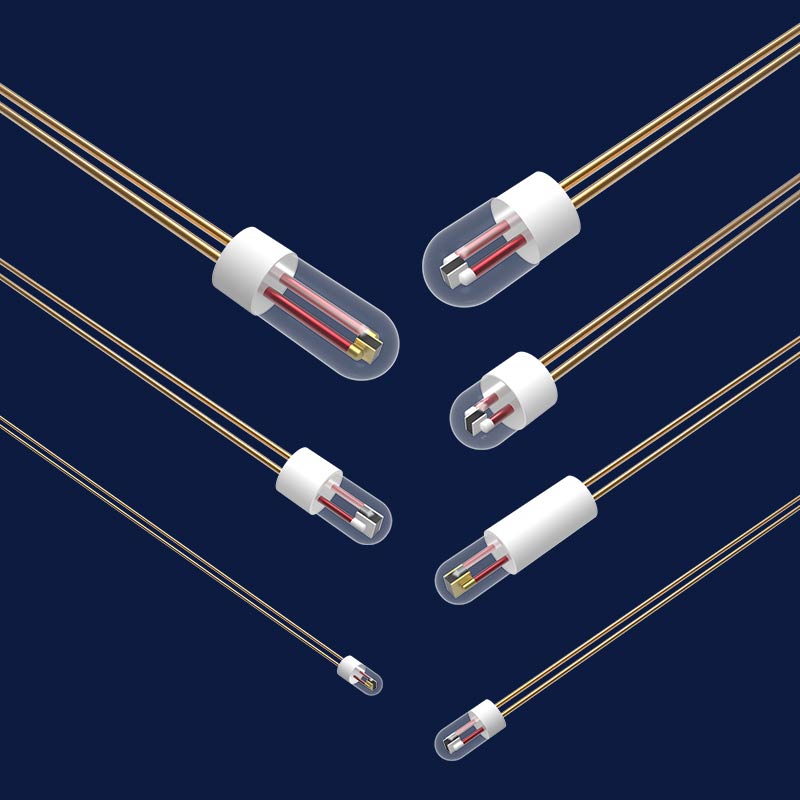
Figure 2. Shiheng's official product illustration of glass-encapsulated NTCs with ceramic bases, showing different structures. The source website was accessed on October 12, 2026; that access date is not a product release date.
R25 denotes resistance at 25°C under specified conditions. Converting resistance to temperature also requires the B value and its defining temperature interval, resistance tolerance and the full resistance-temperature table. Two nominally 10 kΩ parts can give different results at high or low temperature. Each B value is associated with two stated temperatures.
A power NTC's cold resistance limits starting current, then self-heating reduces resistance and steady loss. Allowable current, starting energy and cooling conditions determine its range of use. After a brief power interruption the part may remain hot, providing less inrush limitation than during a cold start.
2. Ceramic PTC products cover protection, precharge and heating
Switching-type ceramic PTC materials exhibit a steep resistance increase near a characteristic temperature region. Current-induced heating or a rise in the monitored temperature can take the element into a high-resistance state.
A PTC used for overcurrent protection sits in series with the protected branch and limits current as it heats. A motor overtemperature sensor instead reports a thermal condition to an external protection circuit. Precharge, starting and self-regulating heating use their own product families.
Ampron's PTC catalog includes circuit overload, overtemperature, motor protection and inrush suppression. Huagong Gaoli offers PTC heating chips as well as automotive air and liquid heaters. The completed heaters add electrical connections, insulation and control structures around the chips and belong to thermal-management assemblies.
Fenghua announced its SPTC thermistor on August 6, 2026 for high-voltage precharge. Its description uses the resistance increase with temperature to address precharge and abnormal current. This differs from the falling resistance of a power NTC.
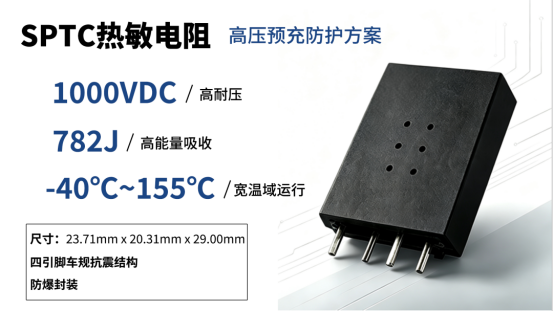
Figure 3. Fenghua's original SPTC announcement graphic, dated August 6, 2026. English reading guide: high-voltage precharge protection; 1,000 VDC; 782 J energy absorption; operation from −40°C to 155°C; dimensions 23.71 × 20.31 × 29.00 mm; a four-lead shock-resistant structure; an explosion-resistant package. These are manufacturer-published statements. Applicable conditions belong to the corresponding specification. The original product image and labeling are preserved.
Within the allowed voltage, energy and thermal loading, a PTC can recover after the fault clears and the device cools. Its high-resistance state is not a mechanical open contact. A heating PTC's equilibrium temperature also depends on supply and heat removal.
Polymeric PTCs, often called resettable fuses, use a polymer material system. They share a positive temperature coefficient with ceramic PTCs, but their materials, ratings and operating conditions make them a separate protection category.
3. MOVs protect against transient overvoltage
Metal oxide varistors, or MOVs, commonly use zinc-oxide ceramic. They present high impedance in normal operation. As transient voltage rises, current increases sharply, limiting the voltage across the device.
An MOV is normally connected across the two points being protected, often at a power input. A power NTC is placed in series to limit capacitor-charging current at switch-on. Both can appear in a supply because they address different events.
Three voltage terms in an MOV specification must be kept separate. Maximum continuous operating voltage states the permissible sustained voltage and distinguishes AC RMS from DC. Varistor voltage is measured at a specified test current. Clamping voltage is the terminal voltage at a specified surge current and waveform.
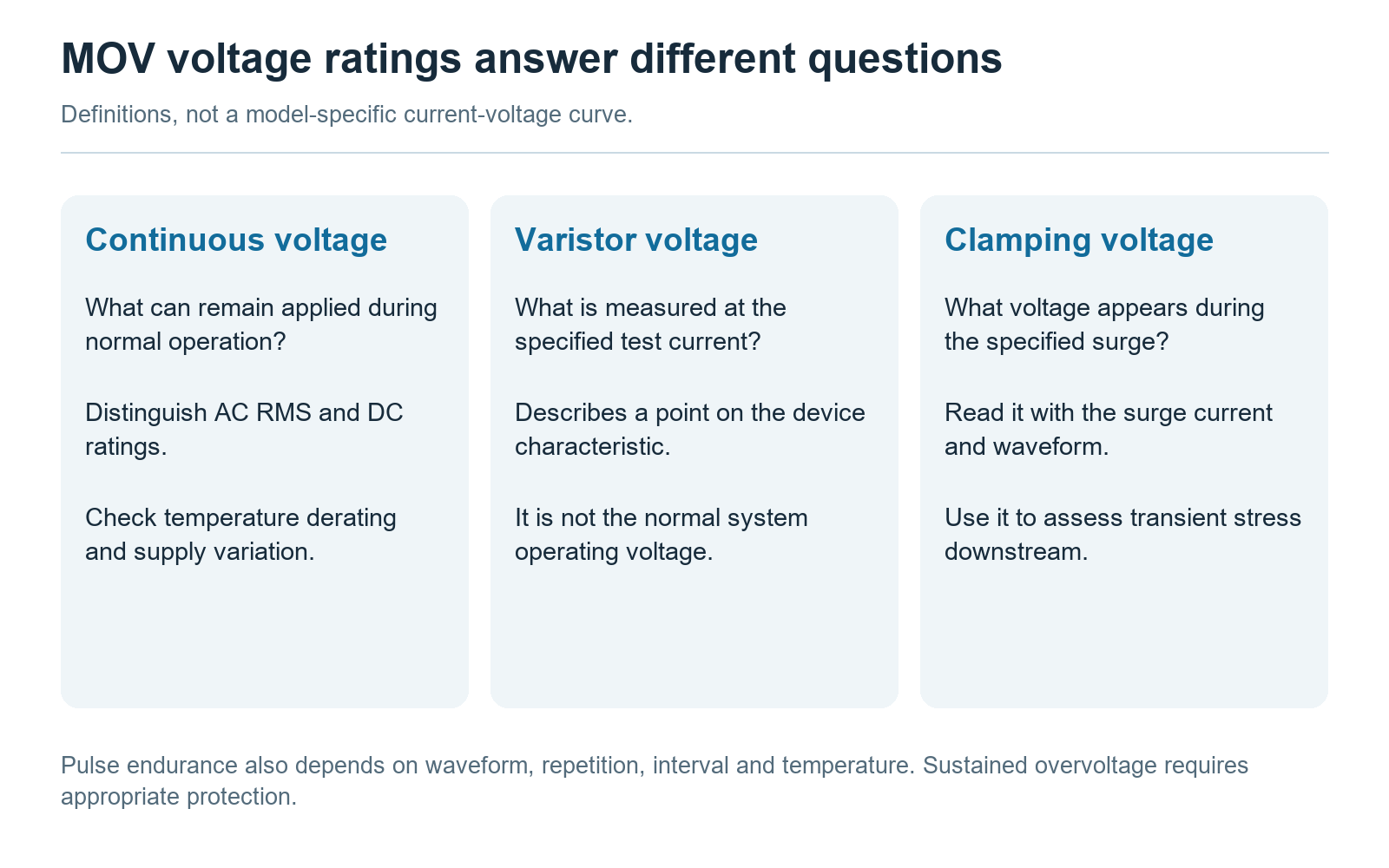
Figure 4. Definitions of MOV voltage parameters. This is not a model-specific current-voltage curve or a set of component-selection values.
Nanjing Shiheng lists overvoltage-protection varistors. Bencent offers MOVs and BMG composite varistor devices. BMG's published parameters involve both an MOV section and a gas-discharge section, so their characteristics must be considered together.
Protection manufacturers may also supply gas-discharge tubes, TVS devices and surge-protection modules. These include resistor components, other device technologies and complete modules, which belong to different market categories.
Excessive or accumulated surge exposure can degrade an MOV. Sustained abnormal overvoltage can cause overheating, which is why circuits may include thermal disconnection and fuses. Surge capability depends on waveform, count and spacing. A single test's peak rating cannot be treated as the same repeated loading over a service life.
4. Potentiometers divide between operation and calibration
Volume and speed controls, sliders and screwdriver-adjusted board components may all use a resistive track with two fixed ends and a moving contact. Three terminals allow voltage division; connecting the wiper and one end creates a variable resistance.
Panel knobs and sliders can be operated repeatedly, making mechanical life, feel and adjustment law relevant. Trimmers, also described as preset or semi-fixed resistors, usually serve factory calibration or service adjustment. They emphasize holding the setting after a limited number of adjustments.
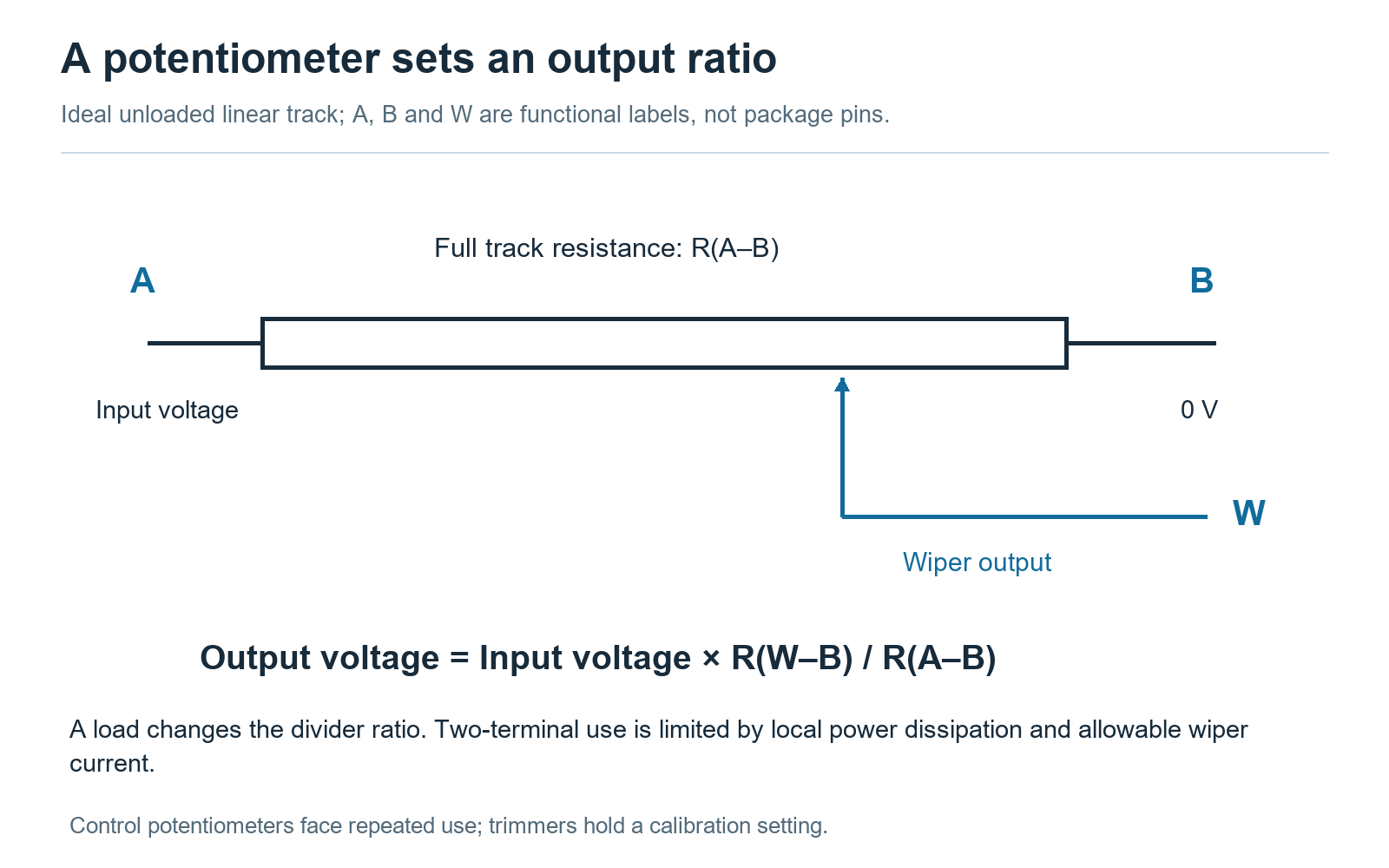
Figure 5. Ideal unloaded linear potentiometer divider. A, B and W identify functions, not the pin numbers of any particular product.
Carbon film is common in general adjustment. Cermet, also described in Chinese catalogs as glass-glaze material, is common in presets. Wirewound constructions serve precision adjustment, with resolution influenced by the winding. Conductive plastic is used where smooth output, mechanical life or position sensing is important. Contact, sealing and mechanical design further affect performance.
Bochen/Guosheng lists surface-mount trimmers, single-turn and multi-turn cermet presets, precision wirewound, carbon-film and conductive-plastic potentiometers. The surface-mount families include 3224 and 3314, while 3296 is among the multi-turn cermet families. A shared series number across brands does not establish identical electrical or mechanical specifications.
Sichuan Yongxing lists precision multi-turn wirewound, cermet preset and precision conductive-plastic potentiometers, with position-sensing products as well. Some accessible material is older. It helps identify the product directions, while current models and specifications require updated manufacturer documentation.
Total resistance tolerance, output linearity, adjustment resolution and contact-resistance variation describe different properties. Multiple turns permit finer adjustment; material, contacts and mechanics determine linearity and life separately. Wiper stability directly affects a divider's output.
The power rating usually applies to the full resistive track. When only a short section carries the load, local heating or wiper-current limits can become restrictive first. Small trimmers therefore serve signals and setpoints; power-load adjustment requires suitable devices and circuits.
5. Mainland suppliers span components and assemblies
The table identifies the mainland suppliers covered here and the product directions in their public material. It is representative, not exhaustive, and is not ordered by market share.
| Mainland supplier | Published product directions covered | Associated functions |
|---|---|---|
| Huagong Gaoli | NTC chips and packages, temperature sensors, PTC chips and heaters | Temperature measurement, compensation and thermal management |
| Ampron | NTC sensors and ceramic PTC families | Sensing, overtemperature and overload protection, inrush suppression |
| Nanjing Shiheng | Sensing and power NTCs, PTCs, varistors and sensor assemblies | Sensing, switch-on current limiting and protection |
| Fenghua | SPTC high-voltage precharge thermistors covered in this article | Precharge and current limiting |
| Bencent | MOVs, BMG composites and other protection products | Transient overvoltage and surge protection |
| Bochen/Guosheng | Surface-mount, single-turn and multi-turn presets; wirewound, carbon-film and conductive-plastic potentiometers | Calibration, operational adjustment and position-related applications |
| Sichuan Yongxing | Precision wirewound, cermet presets and conductive-plastic potentiometers in public catalogs | Precision adjustment and position sensing |
Taiwan-based suppliers form a separate reference group. Thinking lists NTC, ceramic PTC, polymeric PTC and varistors. Joyin lists NTCs, temperature sensors, MOVs and multilayer varistors. Song Huei offers semi-fixed, rotary, wirewound, joystick and slide potentiometers.
The scope of a supplier discussion should match the delivered product. A temperature probe needs resistance-temperature consistency, insulation, mounting and thermal response. A protection part must work with the equipment's surge tests and fault handling. A potentiometer must meet output, assembly and mechanical-life requirements. Board changes, assembly work and validation contribute to the cost of adopting each product.
Discrete NTCs, finished probes, PTC heaters and protection modules have separate capacity and revenue measures. Sensor revenue includes packaging, connection and assembly work; it cannot be converted directly into thermistor unit shipments.
6. Other resistive sensing categories
Resistance can also respond to light, force, humidity and magnetic field. These categories help define the boundaries of a broader supplier directory.
| Category | Quantity that changes resistance | Typical use and distinction |
|---|---|---|
| Metal resistance temperature detectors, including platinum RTDs | Temperature | Industrial temperature measurement; separate from ceramic NTC and switching PTC |
| Photoresistors | Light | Light-level and day/night detection; separate from photodiodes |
| Resistive strain gauges and piezoresistive elements | Strain or applied force | Force, pressure, weighing and strain measurement |
| Resistive humidity elements | Humidity | Humidity sensing; separate from capacitive sensors |
| Magnetoresistive elements | Magnetic field | Field, position and angle sensing, often integrated with circuitry |
| Polymeric PTC devices | Heating of a polymer system | Overcurrent protection; recorded separately from ceramic PTC |
Digital potentiometers are integrated circuits that use a digital interface to control resistor networks and switches. They have specified signal-voltage ranges, wiper-current limits and control interfaces, and form a category separate from mechanical potentiometers.
The supplier directory can then distinguish a bare sensing element, a packaged part and a completed assembly. An NTC chip becomes a probe after packaging and connection work; a potentiometer may become part of a displacement sensor. Recording those levels separately keeps product comparisons and market analysis tied to what is actually supplied.
Prepared from accessible manufacturer material. A catalog listing does not establish current availability of every model. Product parameters and application conditions must be checked against the relevant specification.