
Chinese chip resistor suppliers: thick film, thin film and alloy products
An overseas buyer looking for a chip resistor supplier in mainland China will encounter several different manufacturing routes behind similar packages. A pull-up resistor establishes a logic state. A precision divider influences measurement error. A low-value shunt turns current into a voltage that a controller can measure. Package size and nominal resistance alone do not explain how well a part performs in each position.
This article maps those applications to the published products of Fenghua, Fojan, Xiangsheng, Huacheng, Yezhan and Milliohm, with RESI (Kaibu Ruisi) appearing where current sensing extends into modules. The focus is mainland brands. Taiwan-based suppliers are listed separately for reference. The information describes product offerings and disclosed development stages through October 2026; it is not a market-share ranking or a list of qualified substitutes.
1. Start with the circuit function
Thick-film resistors cover pull-ups, current limiting, biasing and ordinary voltage division. Their resistive layer is typically printed and fired, then trimmed and protected. Manufacturers build general-purpose, pulse-resistant, high-voltage, sulfur-resistant and low-resistance families around this process.
Thin-film resistors generally use a deposited resistive layer. They are candidates when initial tolerance and temperature coefficient must be lower. Measurement front ends and precision feedback circuits also depend on drift under load, humidity, soldering and prolonged operation. Materials, film structure and subsequent processing all affect those results.
Alloy current-sense resistors produce a small voltage drop in the current path. A low resistance reduces power loss, which matters in batteries, power supplies and motor controls. At higher currents, the resistance material, temperature rise and connection structure become part of the measurement problem.
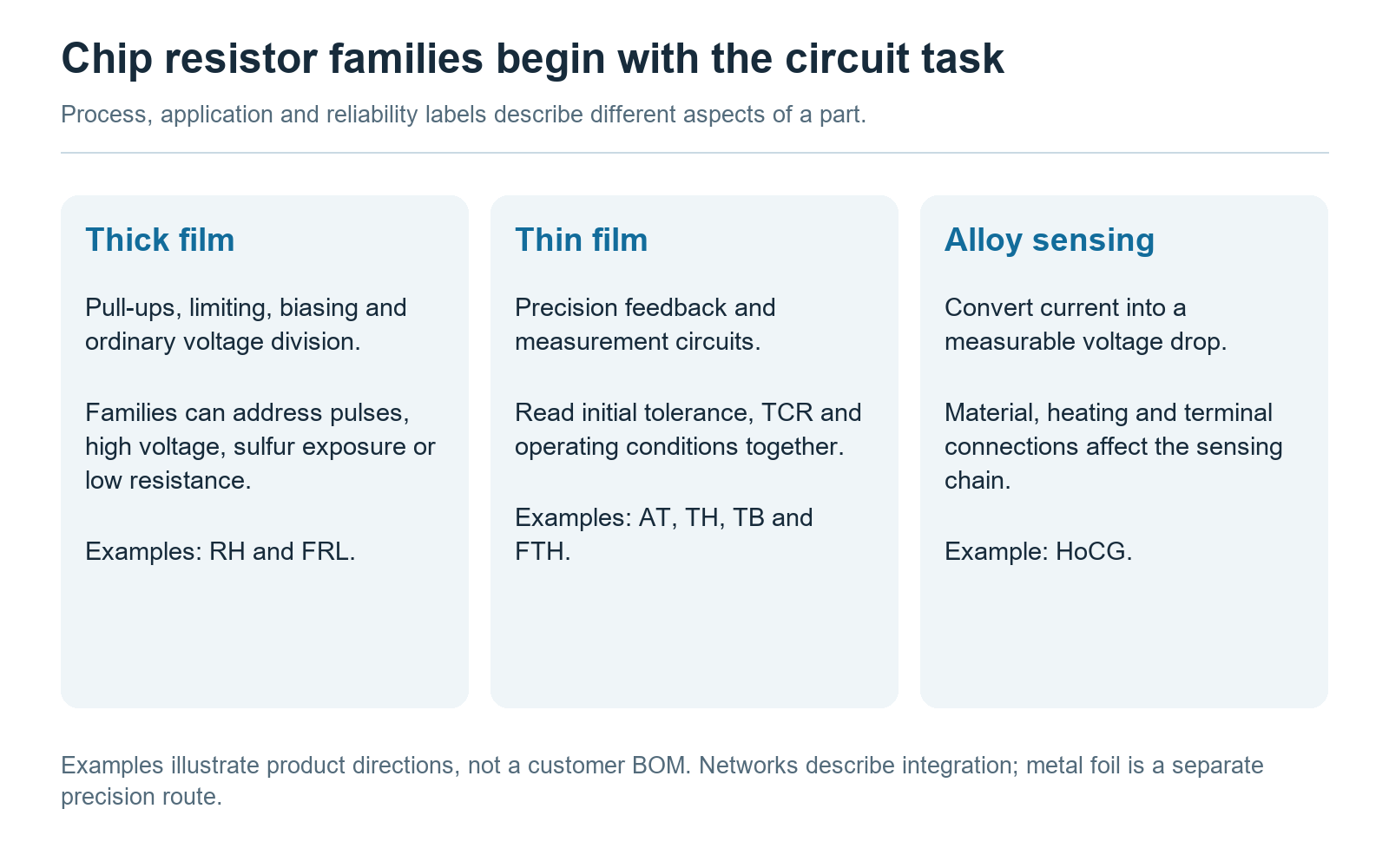
Figure 1. Typical circuit functions and example product families. The examples do not represent a customer's bill of materials.
These categories overlap. Low-resistance thick-film parts can also measure current, while alloy shunts come in several structures. “Current sensing” describes the application; thick film, thin film and alloy describe a process or material. Arrays describe integration, automotive requirements concern reliability, and sulfur resistance addresses a particular environmental exposure.
2. Thick film branches into environmental protection and sensing
Fenghua, Fojan, Xiangsheng and Huacheng all have chip resistor businesses. Two examples show how their product families diverge: Fenghua's RH sulfur-resistant thick-film series and Fojan's FRL low-resistance series.
Fenghua introduced RH in August 2026. Sulfur attack on silver electrodes in ordinary products can change resistance and eventually cause an open circuit. RH addresses this risk through electrode and protective structures. Sulfur-bearing substances may come from rubber and adhesives inside equipment or from the external environment. Exposure time, temperature, humidity and surrounding materials influence the risk; the test environment, duration and permitted resistance change define what a sulfur-resistance result means.
Fojan described FRL in June 2026 for applications including current sensing. The required sense voltage, current range and allowable loss establish a starting resistance range. Within that range, low-resistance thick-film and alloy products can differ in temperature drift, overload performance, heat removal and cost.
Huacheng's website lists thick-film, thin-film, alloy and network products, and it published factory-visit material in September 2026. Xiangsheng's current exhibitor profile identifies chip, through-hole and power resistors. These sources establish business scope; specific package, resistance and performance combinations still belong to the relevant series documentation.
General-purpose parts also face application-specific limits. An input resistor may experience a pulse, a high-value divider can encounter a voltage limit, and a part near a heat source needs temperature derating. Maintaining batch consistency under these conditions is part of supplying a usable family, alongside offering the common values and packages.
3. Thin-film specifications must be read together
In May 2026, Fenghua described AT automotive thin-film, TH high-reliability thin-film and TB metering-oriented thin-film families. Automotive, metering and other reliability-sensitive circuits place different demands on the part. Initial precision and temperature coefficient are only part of that specification.
Fojan's FTH datasheet offers a useful worked example. The version used here is V2.0, dated December 31, 2025. It brings together ordering codes, ratings, resistance ranges and test conditions.
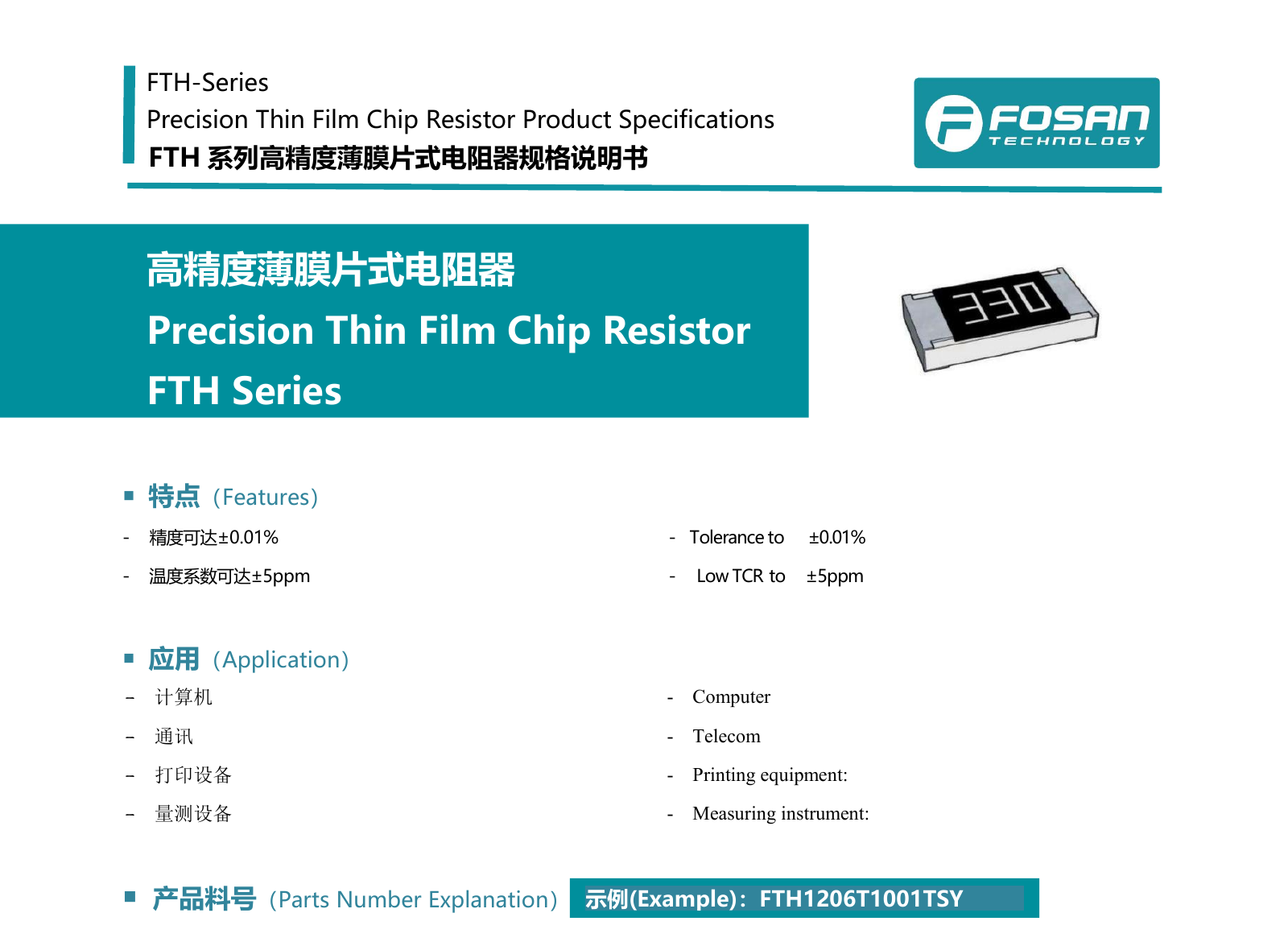
Figure 2. Original bilingual excerpt from page 2 of the FTH specification, V2.0, December 31, 2025. The product appearance is the manufacturer's series illustration, and the part number is an ordering-code example. Neither establishes stock availability.
The example code is FTH1206T1001TSY. It identifies size 1206, tolerance code T for ±0.01%, resistance code 1001 for 1 kΩ, and a final Y code for the 5 ppm temperature-coefficient grade. The full performance table expresses TCR in ppm/°C. For the combination of 1206 size, ±0.01% tolerance and ±5 ppm/°C, the table gives a resistance range from 24.9 Ω to 300 kΩ. The example's 1 kΩ falls within that range. Other sizes and tolerance grades have their own combinations.
Initial tolerance applies under specified conditions. If TCR is assumed constant over a 50°C temperature change, ±5 ppm/°C contributes approximately ±0.025% resistance change. At ±25 ppm/°C the contribution is ±0.125%, and at ±50 ppm/°C it is ±0.25%.
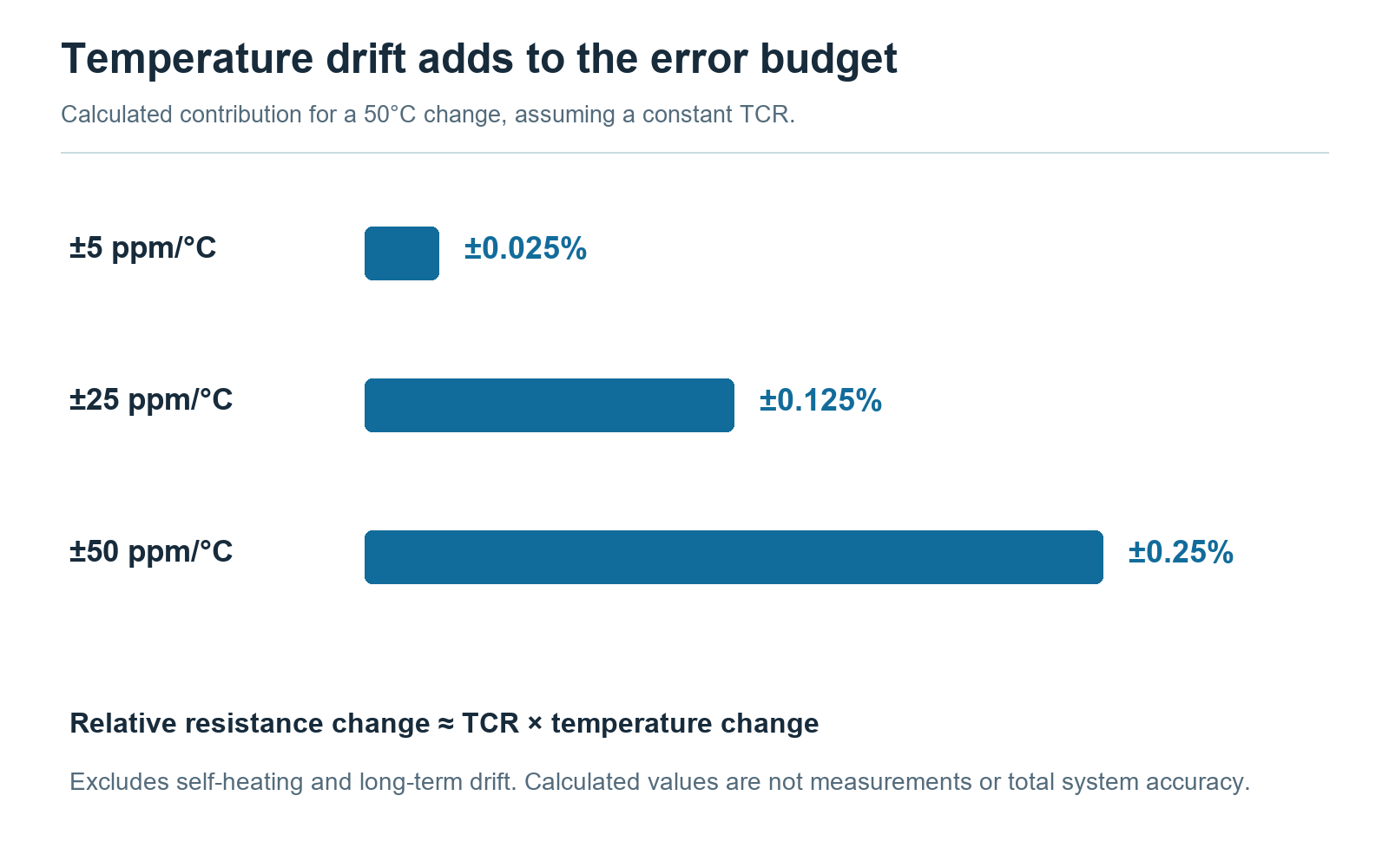
Figure 3. First-order calculation for a constant TCR and a 50°C temperature change, excluding self-heating and long-term drift. These are calculated contributions, not measured results or total system accuracy.
This drift adds to the error budget beyond initial tolerance. Precision dividers also depend on the resistance ratio and how that ratio changes with temperature.
Power and voltage ratings interact in a similar way. In this FTH version, the 1206 rating is 1/4 W and the maximum working voltage is 200 V. For a 1 kΩ part, P = V²/R gives approximately 15.8 V at 0.25 W. Temperature derating and mounting conditions still apply. The 200 V figure is a voltage ceiling; the 1 kΩ example reaches its power limit first.
Noise, load life, humidity and resistance changes after soldering describe behavior after the resistor is assembled and used. Metal-foil resistors provide another precision route, with a process distinct from thin-film deposition. When a Chinese sales website lists both proprietary and distributed products, the brand and actual manufacturer should be recorded separately.
4. Alloy sensing depends on the material and the connection
Yezhan supplies alloy chip resistors and shunts. Milliohm has disclosed developments in electron-beam-welded alloy resistors. Both the resistive material and the way it joins the terminals affect product behavior.
In an official announcement dated September 20, 2026, Milliohm described its HoCG series as newly in mass production. It listed HoCG1206, HoCG2512, HoCG2725, HoCG2728, HoCG2817, HoCG3637 and HoCG4527. This is the manufacturer's disclosed series-level production status; the available resistance, power and tolerance combinations remain specific to each product specification.
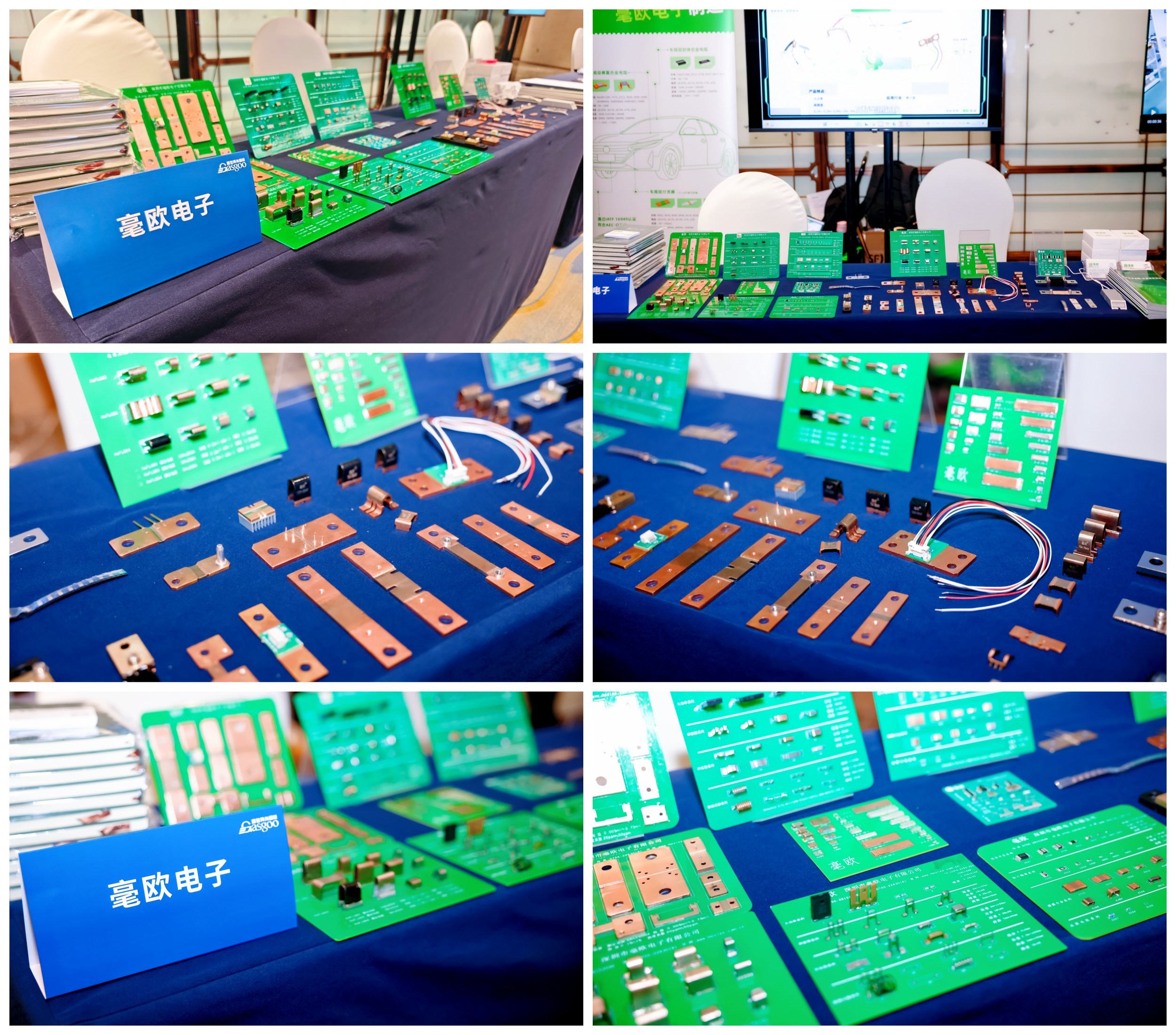
Figure 4. Product display photograph from Milliohm's September 2026 official news material, preserved without alteration. It shows several current-sense structures; it does not identify every displayed part or demonstrate customer adoption.
Small surface-mount devices and larger shunts use different dimensions and connections to suit their installation and current paths. Material choice affects TCR. Joints between the resistor body and terminals affect current and heat distribution. Electron-beam welding is one joining method; environmental protection and installation also influence reliability.
Lower resistance reduces I²R loss but also reduces the measurement voltage. Amplifier offset, noise and additional connection resistance then occupy a larger share of the result. The resistor's tolerance is therefore one term in the complete sensing chain.
A four-terminal structure separates the current connection from voltage sensing to reduce the effect of connection resistance. Two-terminal parts can also use appropriate sense routing, but pads, solder joints and layout require attention at milliohm levels. Temperature rise and measurement performance must be checked in the installed configuration.
Yezhan disclosed in July 2026 that its Shengleicheng subsidiary had broken ground on a project planned for one billion resistors per year. That number is planned annual capacity; actual output depends on construction, commissioning and ramp-up. RESI (Kaibu Ruisi) announced SRES and HRES shunt modules in April 2026 with sample deliveries starting at that time. Sampling, series mass production and construction are distinct stages, even when all appear in suppliers' product-development news.
5. Arrays and automotive requirements add separate dimensions
Huacheng and other mainland suppliers list resistor networks. Integrating several resistors can reduce component count and simplify dense layouts. An isolated array provides separate terminals for each resistor; a common-terminal array joins one end of several elements. Precision divider networks may additionally specify ratio tolerance and tracking TCR.
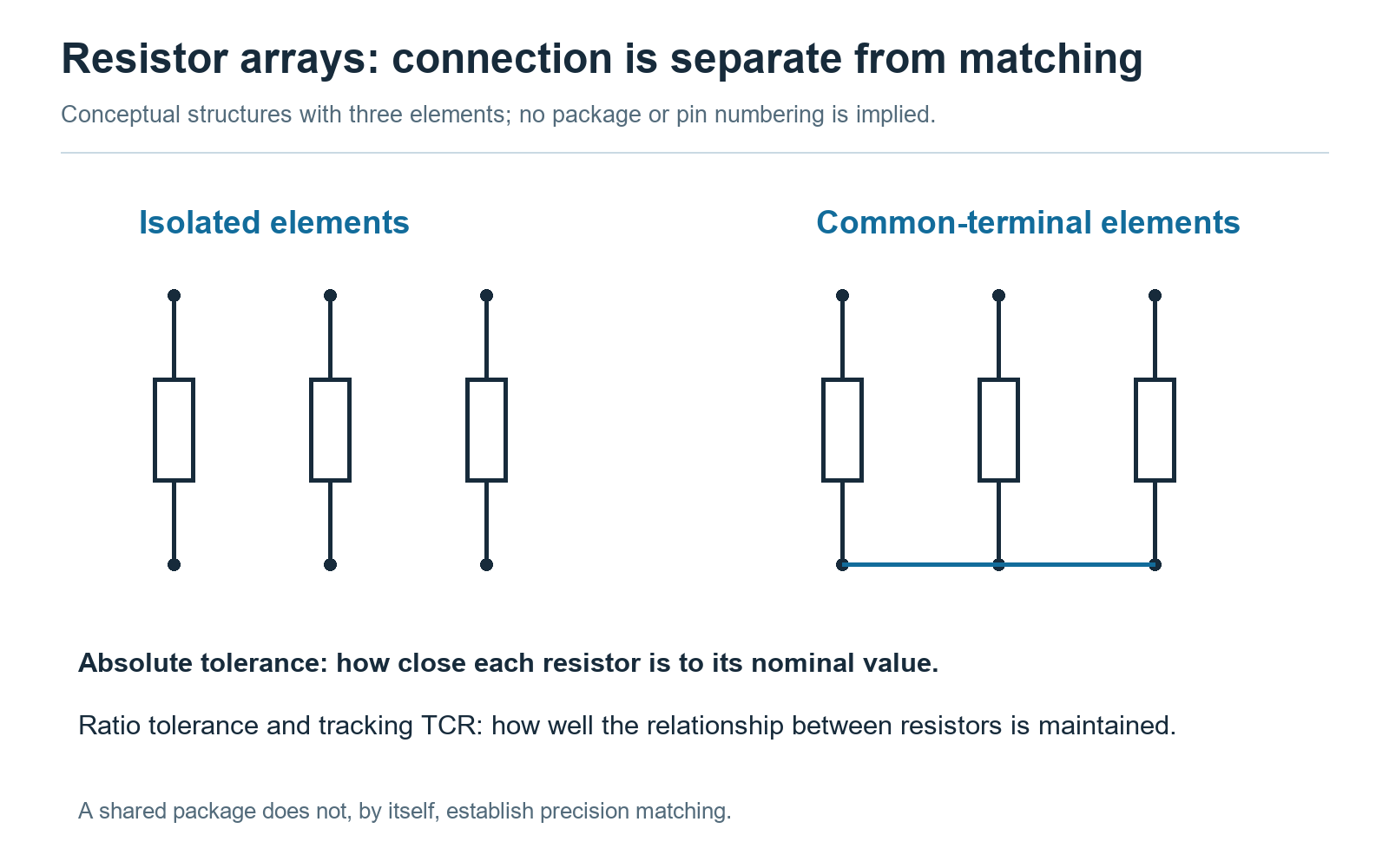
Figure 5. Three isolated resistors and three resistors sharing a common connection. This is a conceptual diagram, not a package pinout. Ratio accuracy and tracking TCR require separate specifications.
For a digital pull-up array, connection structure, value, package and assembly efficiency are prominent considerations. A precision divider network must also hold its resistance ratio as temperature changes. Equal pin counts do not establish equivalent internal structures or matching performance.
Thick-film, thin-film and alloy current-sense products can all have automotive families. A thin-film feedback resistor needs stable measurement behavior; a high-current shunt also faces thermal and connection demands. AEC-Q200 concerns passive-component stress testing, IATF16949 concerns the quality management system, and PPAP concerns customer product approval. Each has its own scope and progress.
Low TCR, pulse endurance and sulfur resistance may occur in the same automotive product. Industrial equipment can also need sulfur resistance. The required combination follows the circuit position and operating environment.
6. A supplier map by product family
The following is a representative map based on the source material and catalogs used for this article through October 2026. It does not cover every mainland manufacturer or support market-share estimates.
| Mainland supplier | Product directions covered | Disclosed material or stage |
|---|---|---|
| Fenghua | Sulfur-resistant thick film; automotive and high-reliability thin film | RH, AT, TH and TB material published in 2026 |
| Fojan | Low-resistance thick film and precision thin film | FRL introduction in 2026; FTH specification dated December 31, 2025 |
| Xiangsheng | Chip, through-hole and power resistors | Current exhibitor profile; exact series require corresponding specifications |
| Huacheng | Thick film, thin film, alloy and networks | Current website categories and September 2026 factory material |
| Yezhan | Alloy chip resistors and shunts | Product scope and July 2026 manufacturing-project groundbreaking |
| Milliohm | Alloy sensing and shunts | HoCG mass-production announcement in September 2026 |
| RESI (Kaibu Ruisi) | Shunt modules | SRES and HRES sample deliveries announced in April 2026 |
Fenghua's examples separate environmental reliability from several thin-film applications. Fojan's FRL and FTH illustrate the distinction between low-resistance thick film and precision thin film. Yezhan and Milliohm concentrate attention on current sensing, while the RESI modules extend that discussion into assembly integration.
Taiwan-based suppliers provide a separate comparison group. Yageo's official catalog includes metal current-sense products. Ta-I lists thick-film resistors, arrays and sensing products, with sulfur-resistant thick-film and low-resistance alloy directions in its application catalog.
For an international sourcing team, these catalogs establish where to begin a supplier discussion. A particular package and value still need a complete specification, test conditions and supply information. A product introduction, a sample shipment, a mass-production announcement and a factory project answer different questions about availability.
The next article follows resistors beyond small surface-mount packages into power, braking and load-test systems.
Prepared from public information available through October 2026. Component selection and substitution require current manufacturer specifications, supply information and validation in the intended circuit.