
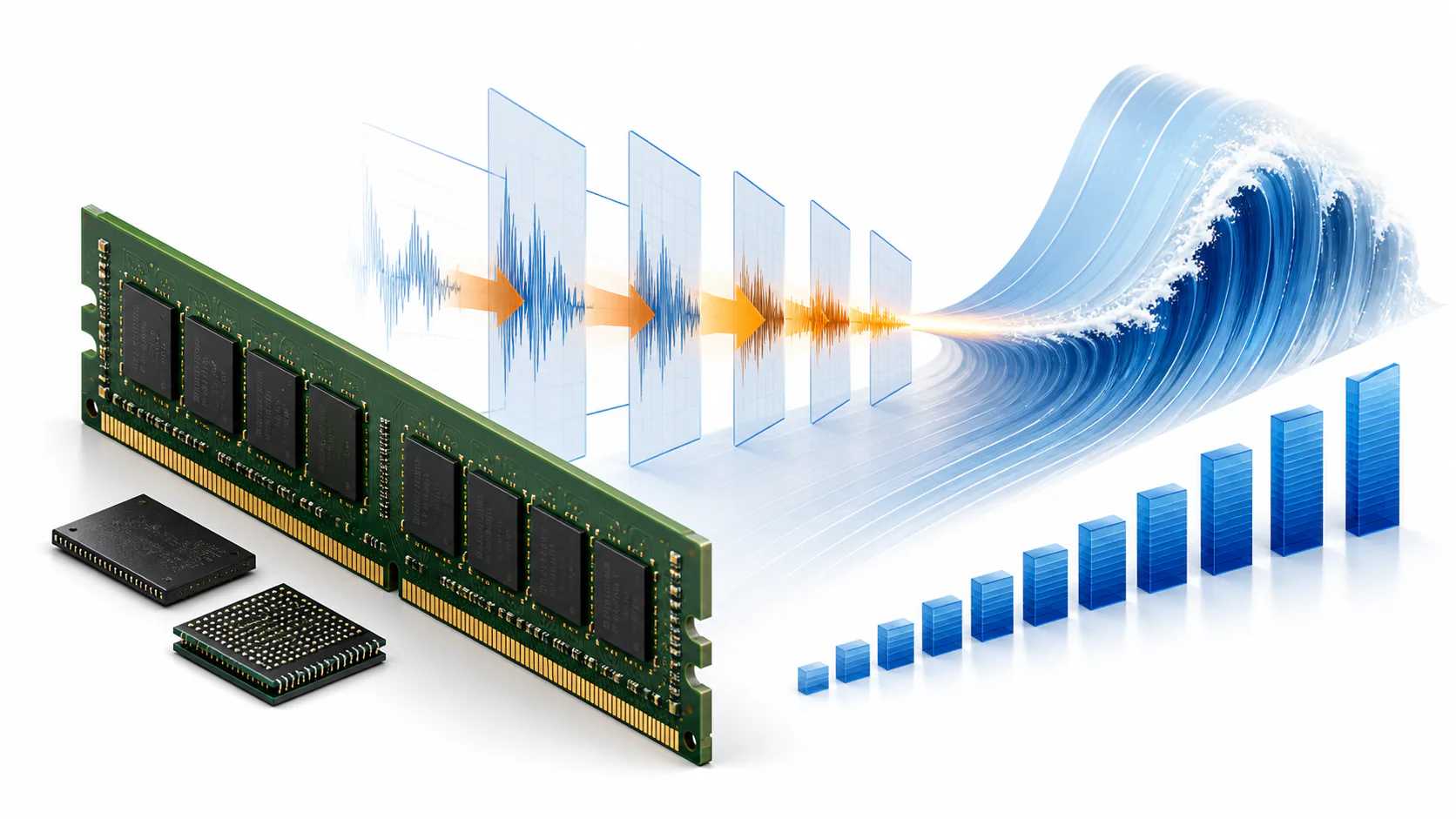
By mid-May 2026, industry commentary was describing firmer DDR4 conditions after the holiday period. The ic.net channel series had shown selected prices turning earlier, during April.
That timing difference does not make one source right and another late. Forecasts, contract negotiations and distributor listings observe different parts of the market.
Define the price being measured
DDR4 has device, module, contract, spot and retail prices. Density, organization, speed, package and grade create separate pools.
A distributor listing can respond quickly but contain small-lot premiums and stale stock. A contract indicator is broader but may update quarterly. Compare each series with itself before combining them.
Record exact MPN, quantity, stock, seller and capture date. Without those fields, an early “turn” may be a different product mix.
Breadth makes an inflection credible
One high quote can be noise. A sustained rise across multiple devices and authorized channels is more useful, especially when inventory declines or replenishment extends.
Use median changes and report how many SKUs moved. Separate outliers rather than letting them define the index. Missing offers should be marked unknown, not automatically scarce.
The April observation mattered because it created a question to verify, not because it guaranteed the next market cycle.
Mature supply can tighten selectively
Samsung, Micron and other major suppliers allocate investment toward newer memory and higher-value products. DDR4 demand remains in industrial, embedded and existing server platforms.
This can reduce supply elasticity before total demand disappears. Specialty organizations and long-life grades may tighten while mainstream commercial devices remain available.
Map the program’s exact configuration and approved sources before reacting to a category headline.
Turn the signal into action
Check supplier-confirmed lead time, allocation, contract renewal and real authorized stock. For single-source parts, accelerate qualification and secure dated commitments. For flexible devices, avoid indiscriminate forward buying.
Module buyers should identify internal DRAM content and change-control terms. The module label can remain constant while the die supplier changes.
Preserve the time context
Historical channel data is valuable because it shows sequence and duration. It becomes misleading when displayed without its capture date as if it were a current quote.
Store the original observation, subsequent confirmation and eventual outcome. That history improves future warning thresholds.
For internal reporting, separate three labels: observed listing, confirmed executable offer and contracted allocation. That small distinction prevents an early directional clue from being repeated as a settled market price. It also lets finance, planning and sourcing discuss the same event without silently using different evidence standards.
The procurement conclusion
The DDR4 firming signal appeared in selected April listings before it became a broader May narrative. Its value was lead time for investigation.
Buyers should combine fast but noisy channel evidence with slower supplier and contract confirmation. Early data is an alarm; disciplined sourcing decides whether to act.
This analysis concerns April–May 2026 observations and is not a current price report.