Film capacitor market outlook: recovering storage demand and diverging supplier profits
China's energy-storage project recovery is creating opportunities for film-capacitor suppliers, but installed battery capacity is an incomplete guide to component orders. DC-link film capacitors in power conversion systems, or PCS, support bus voltage and handle ripple current. Their requirements depend on converter power, topology and customer design choices as well as the scale of storage deployment.
For international readers assessing Chinese suppliers, two developments stand out as of November 2026. Project commissioning recovered in the third quarter, while growth in installed power and stored energy remained different. Manufacturers continued investing in materials and production, yet revenue and profit moved in different directions. The market needs to be assessed through both the end application and the scope of each supplier's actual business.
Faster project commissioning does not translate directly into capacitor orders
Incomplete statistics released by the China Energy Storage Alliance, CNESA, on 14 October put China's new-type energy-storage additions in the first nine months of 2026 at 35.30 GW and 102.31 GWh. Added power capacity fell 3% year on year, while added energy capacity rose 6%. Third-quarter additions reached 13.4 GW and 43.0 GWh. In September, new power capacity rose 42% year on year; standalone storage accounted for 85.3% of that month's additions, while user-side installations continued to decline.
The evidence points to recovering commissioning activity with differences between applications. Suppliers serving standalone storage equipment may see a different order pattern from those focused on commercial and industrial storage cabinets. The statistics also include several storage technologies and cannot all be assigned to electrochemical-storage PCS.

Figure 1. China's new-type energy-storage additions in January–September 2026. Source: CNESA, published 14 October 2026. The survey is incomplete; power and energy are separate measures, not capacitor shipment data.
The distinction between GW and GWh matters at component level. Extending storage duration can increase battery energy without a proportional increase in conversion power. DC-link capacitance must be designed around bus voltage, switching behaviour, permissible voltage variation and thermal conditions. Battery GWh cannot simply be converted into capacitor purchases.
At unchanged converter power, longer storage duration does not require a proportional increase in DC-bus capacitance. Different power modules, switching frequencies or busbar layouts can, however, change capacitor count, construction and interfaces. Component orders also generally precede plant commissioning, creating a timing gap between installation statistics and a supplier's quarterly revenue.
The recovery therefore supports a demand opportunity, but not a conclusion that all storage film capacitors are simultaneously scarce or rising in price. Customer exposure, participating projects and the component's role determine how much additional business a manufacturer can capture.
Chinese suppliers are extending materials production and customised assemblies
Faratronic has a broad film-capacitor portfolio and develops and manufactures metallised film and busbars. Tongfeng's coverage extends to capacitor base film, metallised film and finished capacitors. These represent different levels of materials integration: producing metallised film does not by itself establish in-house base-film production.
Tongfeng's first-half 2026 report stated that its upgraded new No. 1 capacitor-film line formally entered production in February and operated continuously during the half year. The project remained in the market-development phase. Manufacturing capability was becoming available, while order absorption and economic returns still needed to develop.
Jianghai is expanding its film business. First-half revenue from that business reached RMB 311 million, up 33.56%. The company reported increased film-capacitor capacity and manufacturing optimisation. This demonstrates growth in the broader product category, which spans several applications and cannot all be attributed to storage PCS.
Eagtop's position is closer to customised procurement by power-electronics customers. Filing material disclosed in June 2026 showed that its wind, photovoltaic and storage business included capacitors, busbars, resistors and inductors. Customers included Sungrow, KK Wind Solutions and Goldwind. A wider component offering can support coordinated design around a customer, but the business-level customer list does not prove supply of an individual storage-capacitor model.
| Supplier | Recent business and manufacturing position | Scope of the evidence |
|---|---|---|
| Faratronic | Film capacitors, metallised film and busbars, with applications including storage | Company revenue includes multiple end markets |
| Jianghai | Film-business expansion and manufacturing optimisation; group capability in vacuum metallisation | Film-business revenue is not storage-capacitor revenue |
| Tongfeng | Base film, metallised film and capacitors; a new film line is in operation | The line still needs market development; capacitor reporting covers a broad category |
| Eagtop | Custom capacitors, busbars and other components; disclosed wind, solar and storage sales and customers | The combined application business does not isolate storage |
| Shengye Electric | Acquisition of Huajia New Materials extends base-film coverage; investment in aluminium housings and precision hardware | Acquired revenue and growth in the existing business need separate assessment |
| Sun.King Technology | Power-electronic capacitors and busbars; disclosed renewable-generation and storage business | The application segment also includes semiconductors and is not a pure capacitor business |
Shengye acquired a 51.0189% interest in Huajia New Materials in the first half and jointly established Shengyan Electronics, strengthening base-film and housing/hardware supply respectively. Sun.King's renewable-generation and energy-storage segment reported approximately RMB 284 million in first-half revenue, up 82%. Because that segment includes capacitors, power semiconductors and busbars, the growth rate cannot be assigned to storage capacitors alone.
These approaches address different cost and delivery requirements. In-house materials production gives manufacturers more control over processes and supply arrangements, while adding equipment investment and utilisation pressure. Custom assemblies bring suppliers closer to equipment design, requiring continuing expenditure on interface adaptation, samples, testing and engineering support. Orders and production efficiency will determine whether either approach improves profitability.

Figure 2. Original manufacturing and testing pages from Sun.King's power-electronic capacitor brochure, listed on its website in July 2026. Reading guide: the left page covers winding, metal spraying, vacuum treatment, electrical conditioning and assembly; the right covers enclosure welding, resin filling and testing. The original material and labels are retained. These are the company's descriptions, not third-party verification of capacity or yield.
Price reductions, costs and acquisitions produce different profit outcomes
Third-quarter reports show no common profit trajectory across the suppliers. Faratronic's first-nine-month revenue was RMB 4.404 billion, up 11.65%, while net profit attributable to shareholders was RMB 930 million, up 4.77%. Jianghai's company revenue and attributable net profit rose 19.50% and 16.71% respectively. Tongfeng's revenue and attributable net profit remained below the prior-year level for the first nine months, although attributable net profit in the third quarter alone rose 15.77%.

Figure 3. Consolidated revenue and attributable net-profit growth for January–September 2026, from the four companies' third-quarter reports. All businesses are included. Shengye's figures include consolidation effects; this is not a ranking of storage-capacitor performance.
Faratronic illustrates why slower net-profit growth does not automatically imply declining capacitor gross margin. Calculated from consolidated revenue and cost of sales, its first-nine-month gross margin was approximately 33.06%, compared with 32.88% a year earlier. Financial expenses changed from negative RMB 22.9594 million to positive RMB 21.6103 million. Its half-year report had attributed the change in financial expenses for that reporting period mainly to foreign-exchange losses. Manufacturing performance and financial gains or losses need separate analysis.
Eagtop's filing gives more specific evidence of product-pricing pressure. In its wind, solar and storage business, capacitor revenue in 2025 was approximately RMB 86.95 million, down from approximately RMB 105 million in 2024. The category's average selling price fell from RMB 90.76 to RMB 79.75 per unit. The company cited major customers' annual price-reduction policies, while differences in model mix also affected the category average.
This information was disclosed in 2026 but describes 2025 operations, not November 2026 spot pricing. It demonstrates an established commercial constraint: access to leading equipment customers can still involve continuing cost-reduction demands. Upstream cost inflation and downstream annual price reductions can occur together. Higher prices for materials or complete equipment do not automatically give capacitor suppliers pricing power.
Tongfeng's first-half capacitor revenue was approximately RMB 302 million, down 13.13%, with a gross margin of 20.48%, a decline of 2.66 percentage points. The company cited intensified competition and higher raw-material costs among the influences. Jianghai's film-business gross margin was 15.21% in the same half year. Different product and application mixes prevent those figures from establishing which company's storage DC-link capacitors are more profitable.
Shengye presents a combination of acquisitions and operating growth. Revenue rose 56.68% in the first nine months, while attributable net profit fell 76.35%. Newly consolidated Huajia New Materials and Shengyan Electronics contributed approximately RMB 150 million in revenue, and the existing business also grew. The company disclosed costs rising faster than revenue in its existing operations, higher costs in new-energy applications, and changes in acquisition-related expenses, financial expenses and impairment.
These results establish diverging company outcomes, not an industry-wide decline in storage-capacitor profits. More explanatory measures would be volume, selling price, unit cost and collections within the same business. Public disclosure remains insufficient to calculate standalone PCS-capacitor margins or returns from individual customer projects.
Low-inductance designs and lifetime conditions shape international comparisons
Product competition continues beyond nominal capacitance and voltage. TDK introduced the B25696H DC-link film-capacitor series in June 2026, explicitly naming energy-storage systems among its target applications. The series covers 47–1,280 μF and rated DC voltages of 900–2,000 V. Its internal busbar arrangement is intended to improve current distribution between winding elements and reduce parasitic inductance and losses.
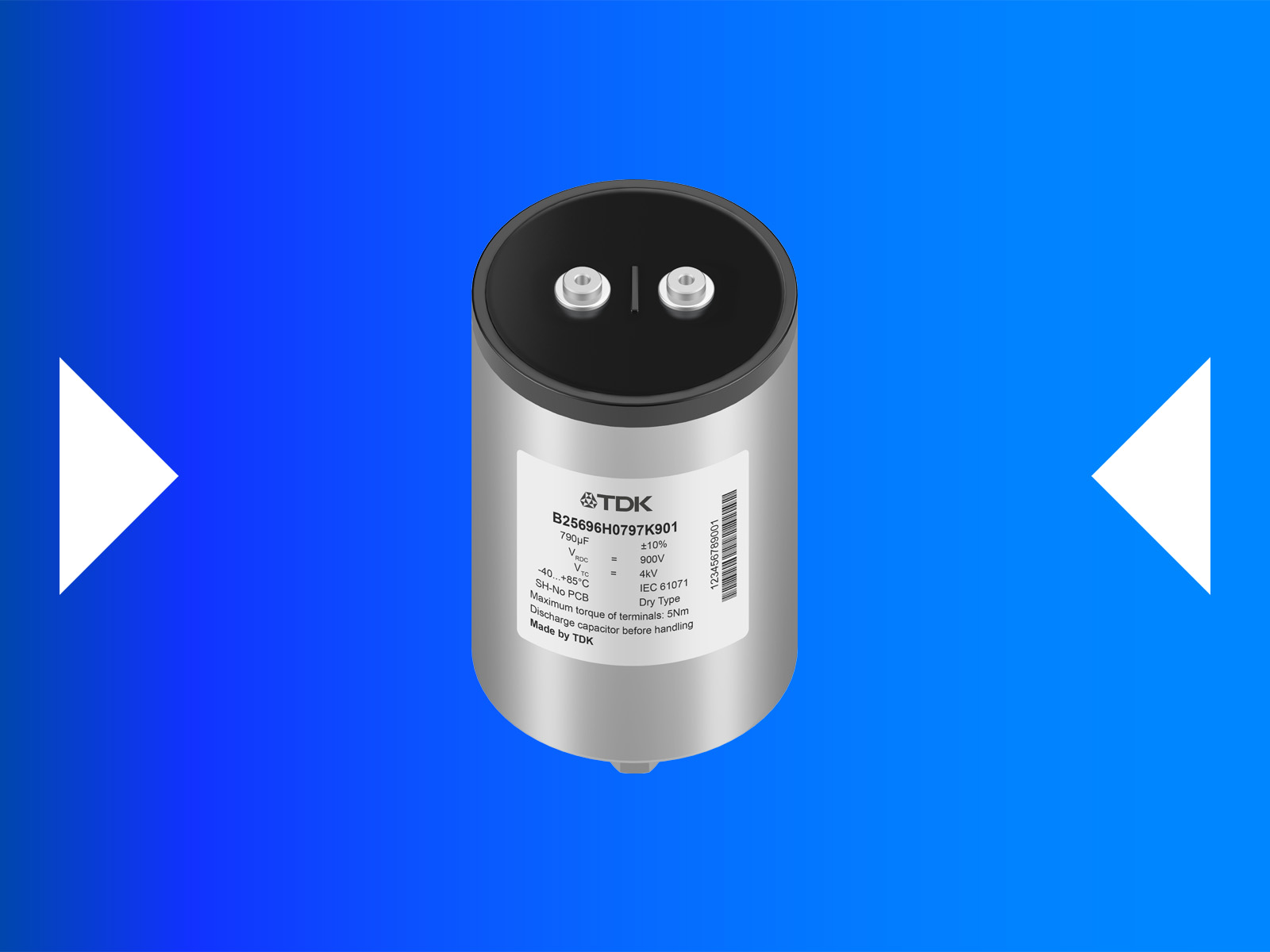
Figure 4. Official TDK product image for the B25696H series, released in June 2026. The pictured device does not represent one common specification for the entire range and does not establish adoption by a particular storage-equipment manufacturer.
Under high-frequency switching, connection-path inductance affects voltage spikes, while ripple-current losses raise internal temperature. The capacitor body, terminals and external busbar need to be considered together. Selecting a higher voltage rating alone will not resolve every design issue. This gives practical value to Chinese suppliers' work on busbar integration, manufacturing consistency and testing.
Lifetime claims also depend on operating conditions. TDK's expected lifetime of 100,000 hours corresponds to a 75°C hot-spot temperature and the applicable rated voltage; longer life requires temperature and voltage derating. Ignoring those conditions in purchase-price comparisons may leave the equipment designer with extra capacitance, additional cooling or later maintenance costs.
The new series provides a defined international comparison point, but assessing a gap against Chinese products requires data under the same conditions. Chinese suppliers have different strengths in materials, winding, metallisation, packaging and busbars. Public information does not yet provide a complete, common-condition comparison across multiple suppliers. Temperature rise, lifetime, dimensions and delivery consistency in the actual customer design are more useful than a ranking based on a single catalogue parameter.
The clearest change in storage DC-link film capacitors is a partial recovery in project demand alongside continuing Chinese materials and manufacturing investment. Business results remain uneven. Suppliers that maintain quality under customer cost-reduction requirements, control unit costs and turn new business into sustained profit are better positioned to convert that recovery into economic returns.
Prepared from public information for industry discussion; not investment, procurement or part-selection advice. Product specifications and supply status remain subject to current manufacturer and customer information.