Reports in April 2026 that KIOXIA was moving legacy 2D NAND products toward end of life drew immediate price speculation. For supply teams, the more durable signal was the loss of a production path. Demand for an old device does not vanish when a leading supplier reallocates investment.
The first impact was likely to appear in low-density and long-life designs, not as a uniform change across all NAND.
A product exit is different from a temporary cut
A cyclical production cut can be reversed when demand and pricing recover. An end-of-life program establishes order and shipment deadlines, after which the original part may no longer be available from normal production.
That changes the buyer's task. Waiting for a better spot price is less important than determining remaining lifetime demand, last-time-buy exposure and the schedule for a qualified replacement.
Every affected team should obtain the original manufacturer notice and verify the exact die, package, density and ordering code. Summaries can collapse several timelines into one.
Low density can be strategically difficult
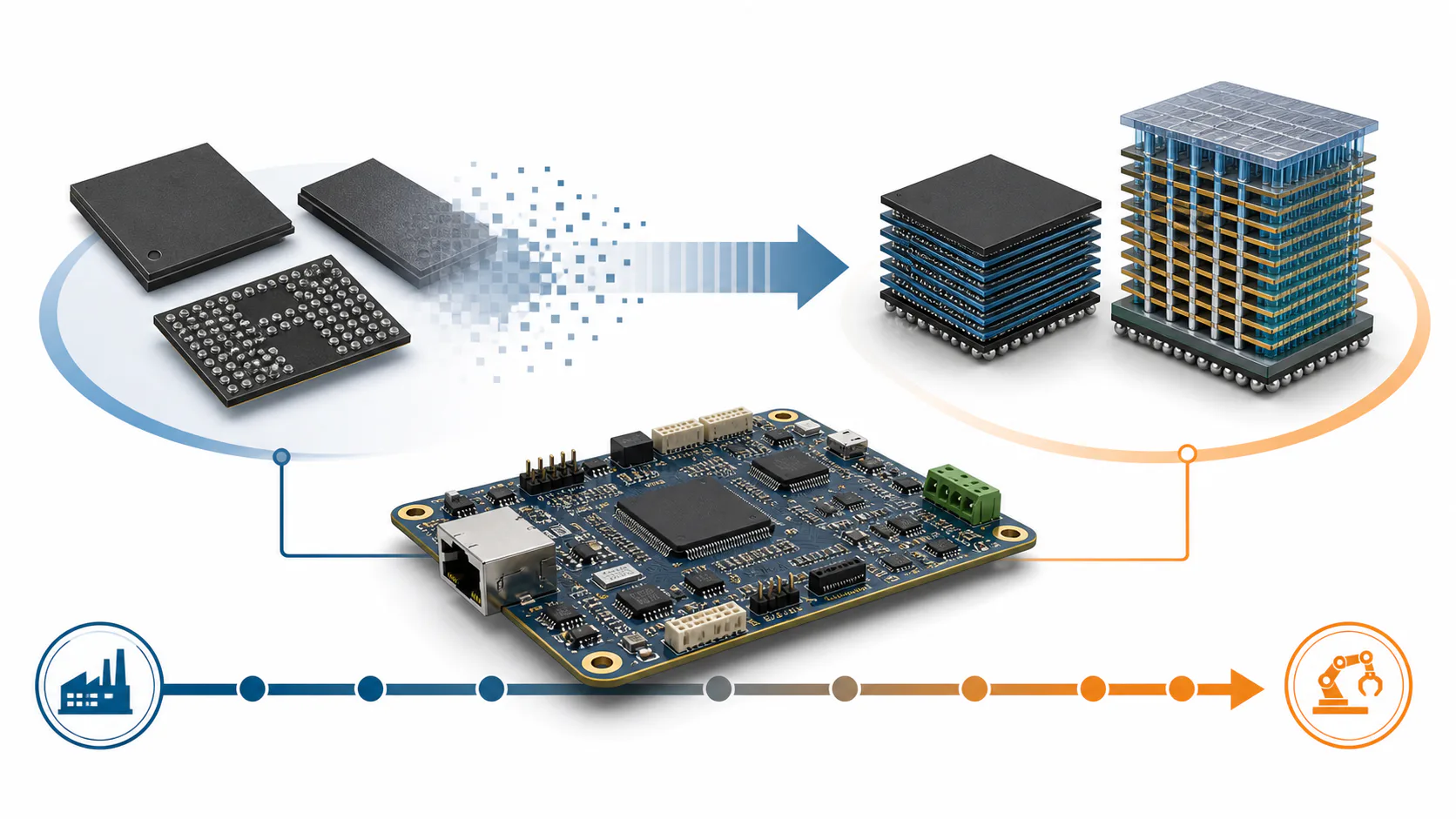
Advanced 3D NAND improves economics at high density, but a small industrial controller may need modest capacity, predictable behavior and years of supply. A newer, larger device can require controller, firmware, boot-flow or board changes.
Older TSOP, BGA, raw NAND and managed-storage products also have different replacement paths. Package compatibility alone does not establish command, timing, ECC or endurance equivalence.
The unit value may be small while the redesign and recertification cost is large.
Audit the installed base now
Search all active and service BOMs for the affected manufacturer families. Include repair inventory and low-volume products that ordinary spend analysis may miss. Record annual usage, remaining program life, approved alternates and validation lead time.
Classify each position: safe through end of life, suitable for a controlled last-time buy, replaceable with an existing approved source, or requiring redesign. Assign an owner and a decision date before the order deadline.
For a last-time buy, account for yield, field service, storage conditions, moisture controls and obsolescence risk. Buying the forecast without those factors is not a complete plan.
Replacement needs system evidence
Macronix or another supplier may provide a candidate for some legacy requirements, but the substitution must be evaluated at device and system level. Review geometry, interface, ECC assumptions, bad-block management, endurance, retention and temperature range.
Test boot, power interruption, wear behavior and software error handling. Confirm traceability and product-change terms. For automotive, medical or industrial systems, preserve the qualification evidence and customer approvals.
Unverified broker stock should remain a contingency with inspection controls, not the default lifecycle strategy.
The procurement conclusion
The 2026 KIOXIA transition mattered because it narrowed the future supply base for specific legacy designs. It did not imply that every NAND product would move together.
Buyers should convert the notice into an installed-base audit, a dated decision and a validated replacement path. In obsolescence management, time to qualify is often scarcer than inventory.
This article reflects information available in April 2026. Teams should verify current lifecycle status and official notices before acting.