
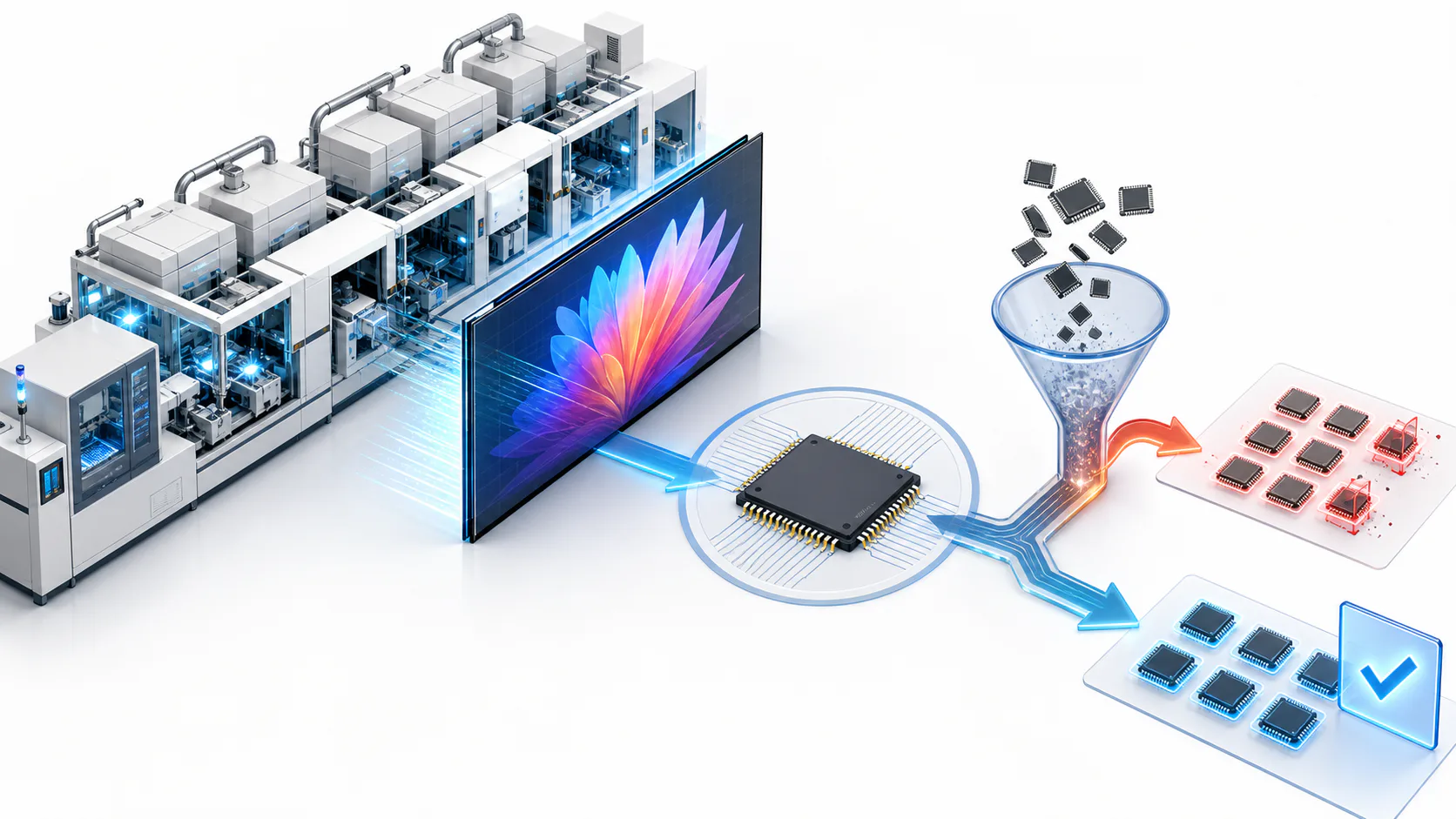
BOE announced production at its Chengdu 8.6-generation AMOLED line in June 2026, with 14-inch 2.8K notebook panels among the first deliveries described by the source. The manufacturing milestone did not automatically qualify a domestic display-driver IC.
Panel capacity and driver readiness move through different engineering gates.
Medium-size OLED is a different workload
A notebook panel combines high resolution, long daily operating time, multiple refresh modes and strict uniformity requirements. Experience with a smartphone DDIC is relevant, but it does not remove the need to qualify a new panel architecture.
Timing, source and gate drive, power sequencing and compensation behavior must work across the complete display. Package routing and thermal limits also change with panel size and interface.
The candidate list begins with function; approval depends on image quality and stability.
The DDIC does not operate alone
The system includes timing control, power management, interface, panel process characteristics and calibration data. A change in one element can alter flicker, color, brightness uniformity or power consumption.
Procurement should map which company owns each interface and who resolves a cross-component defect. Buying the driver, TCON and PMIC from separate vendors can create an integration gap when the display fails only under a particular refresh or temperature condition.
A complete reference stack can be more valuable than a lower unit price.
Image defects are production evidence
Mura, line defects and nonuniform brightness may emerge from the interaction between silicon, compensation algorithms and panel variation. Passing an initial electrical test or lighting a sample is only the first gate.
Qualification needs temperature, aging, refresh transitions, low-gray behavior and production-lot distributions. Preserve calibration settings and panel-lot identity so failures can be reproduced.
The relevant yield is saleable-display yield, not only DDIC wafer yield.
Capacity must include support
As an 8.6-generation line ramps, engineering changes and panel learning cycles are normal. A driver supplier needs application engineers, failure analysis, stable software and controlled revisions alongside wafer and package capacity.
Buyers should request the exact validation phase, approved panel combinations and change-notification terms. “Designed for OLED” is not the same as released for a named notebook panel.
Commercial forecasts should follow the same gates. Separate engineering samples, customer-qualified parts, pilot quantities and repeat production in the sourcing dashboard. Record which panel revision and calibration package each status covers. This prevents a supplier's total design-win count from being converted into available volume before the display and manufacturing evidence actually exist.
The procurement conclusion
The BOE ramp expanded the addressable system for medium-size OLED components. It also raised the qualification bar for DDIC vendors because a larger production line amplifies integration and yield problems.
Overseas buyers should judge driver candidates on demonstrated panel compatibility, image-quality data and support ownership. Local panel production creates an opportunity; only a validated display stack converts it into reliable supply.
This article reflects a July 2026 production milestone and does not claim qualification of any unnamed DDIC.