
Can a solid polymer capacitor be replaced directly when capacitance, voltage and dimensions match? Lelon's OP-CAP conductive-polymer solid aluminum electrolytic range shows why those three checks are insufficient.
Different series emphasize low ESR, long endurance or operation up to 125°C. Behind these labels are different electrical ratings, test conditions and even different lifetime-estimation models. For engineering and purchasing, the task is to identify what each series is intended to solve and compare parameters under equivalent conditions.
1. OVH and OVB: same 6.3 V, 330 μF and case size, different tradeoffs
Lelon's 2026 English catalog lists both OVH and OVB at 6.3 V, 330 μF and 8 mm diameter × 6.7 mm length. The OVH example has 9 mΩ maximum ESR and 4.5 A RMS rated ripple current; the OVB example has 14 mΩ and 3.9 A RMS.
The conditions matter: ESR is specified at 20°C and 100–300 kHz, while ripple current is rated at 100 kHz and 105°C. A meaningful comparison keeps those conditions aligned.
OVH may appear to offer better electrical performance in this pair, but the endurance ratings are very different: 2,000 hours at 105°C for OVH, compared with 20,000 hours at 105°C for OVB. Within the same case size, these parts make different tradeoffs. Lower ESR helps reduce ripple-related loss, and a higher ripple-current rating allows more current under the specified conditions. Endurance duration is another reliability-related specification.
These two examples do not establish that every OVH part has lower ESR than every OVB part. Nor do they establish that longer endurance always requires higher ESR. A quotation request should identify the series, voltage, capacitance, dimensions and test conditions to avoid comparing unlike specifications.
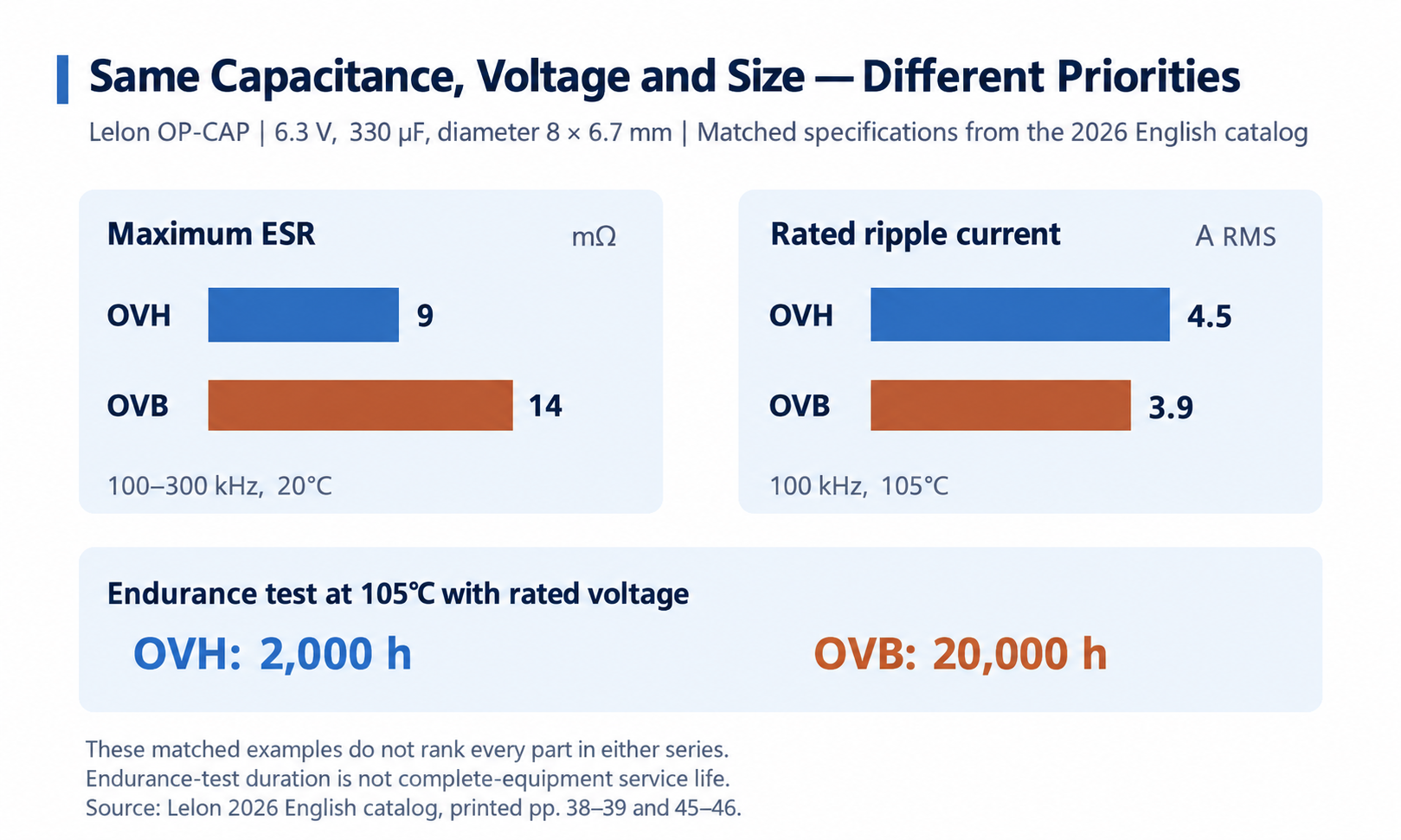
Figure 1. Catalog comparison at the same voltage, capacitance and dimensions. Endurance figures are test durations at rated voltage and 105°C, not complete-equipment service lives.
2. Why 20,000 hours does not establish ten times the service life
A catalog endurance duration belongs to a defined test. For both OVH and OVB, rated voltage is applied at 105°C for the specified time. The parts are then returned to 20°C and checked against limits for capacitance change, dissipation factor, ESR and leakage current.
Field temperature, ripple loading and cooling may differ substantially. Dividing 20,000 by 2,000 gives the ratio of the two endurance-test durations. It does not justify promising that complete equipment will operate ten times longer.
Another easily overlooked point is that Lelon assigns these series to different lifetime-estimation equations. Its precautions place OVH under Model 1, which uses a factor of ten per 20°C temperature difference, and OVB under Model 2, which uses a factor of two per 10°C difference.
Even the temperature definitions differ. Model 1 uses the rated maximum operating temperature and actual ambient temperature. Model 2 involves capacitor core temperatures under specified and actual operating conditions.
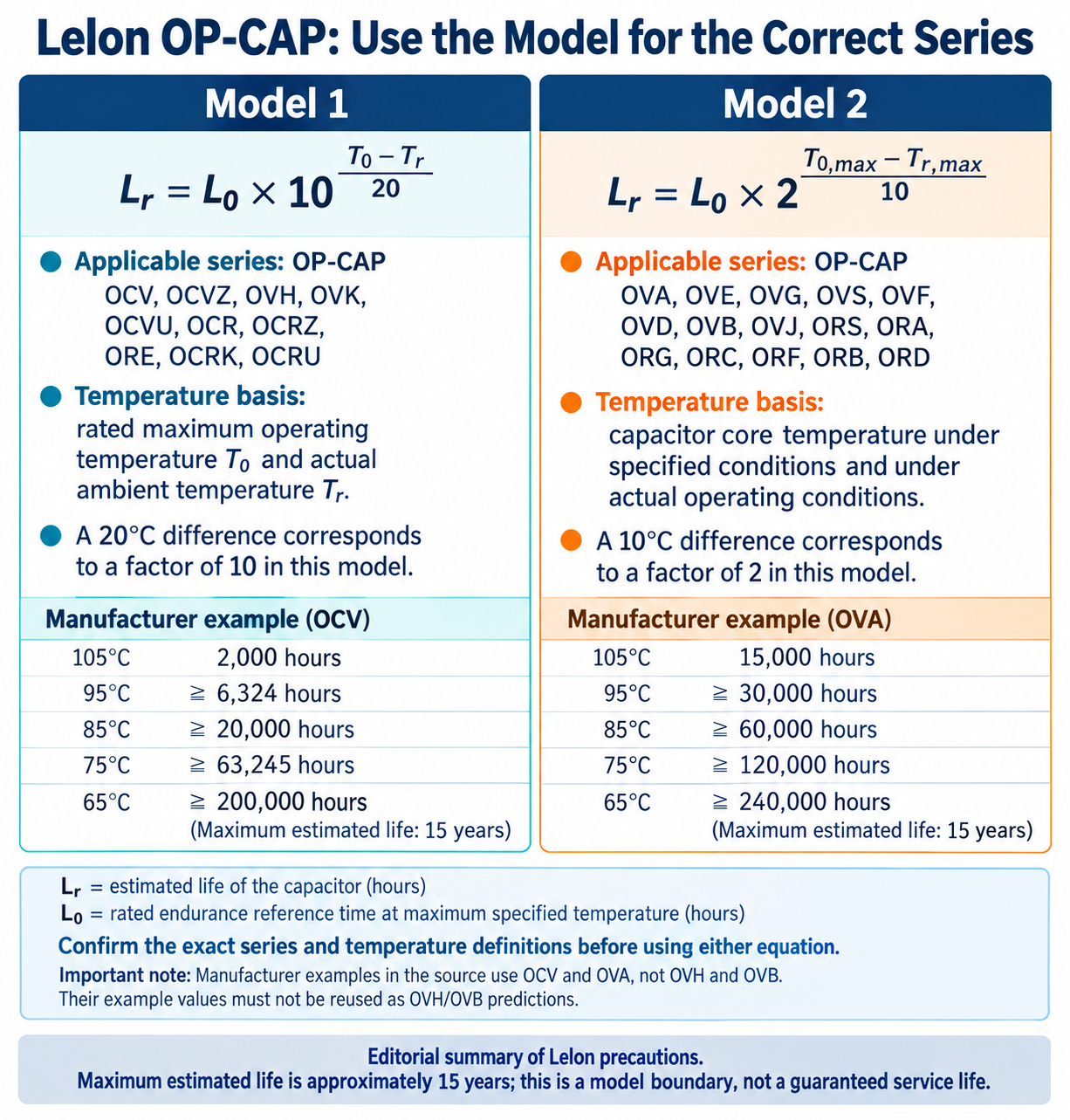
Figure 2. Editorial summary of Lelon's precautions. The worked examples in the original excerpt use OCV and OVA; OVH and OVB appear in the respective applicability lists. The examples must not be reused as predictions for OVH or OVB.
The familiar “life doubles for every 10°C reduction” rule therefore cannot be applied indiscriminately across OP-CAP. Confirm the series and the meaning of each temperature before using a model. Lelon also specifies an approximately 15-year maximum estimated-life boundary. That is a limit on the estimate, not a guarantee that every capacitor will last 15 years.
For a continuously operating power supply, selecting a “20,000-hour” part is only one step. First establish operating temperature and load duration, then evaluate the part using its applicable model.
3. OCVU reaches 125°C, but endurance still depends on voltage
If the local temperature exceeds the range of a 105°C series, adding more endurance hours at 105°C does not solve the temperature-limit problem.
Lelon's OCVU extends the operating range to −55°C to +125°C, but the series does not carry a uniform “2,000 hours at 125°C” rating. Its documentation distinguishes:
- 2.5–4 V: 1,000 hours at 125°C.
- 6.3–16 V: 2,000 hours at 125°C.
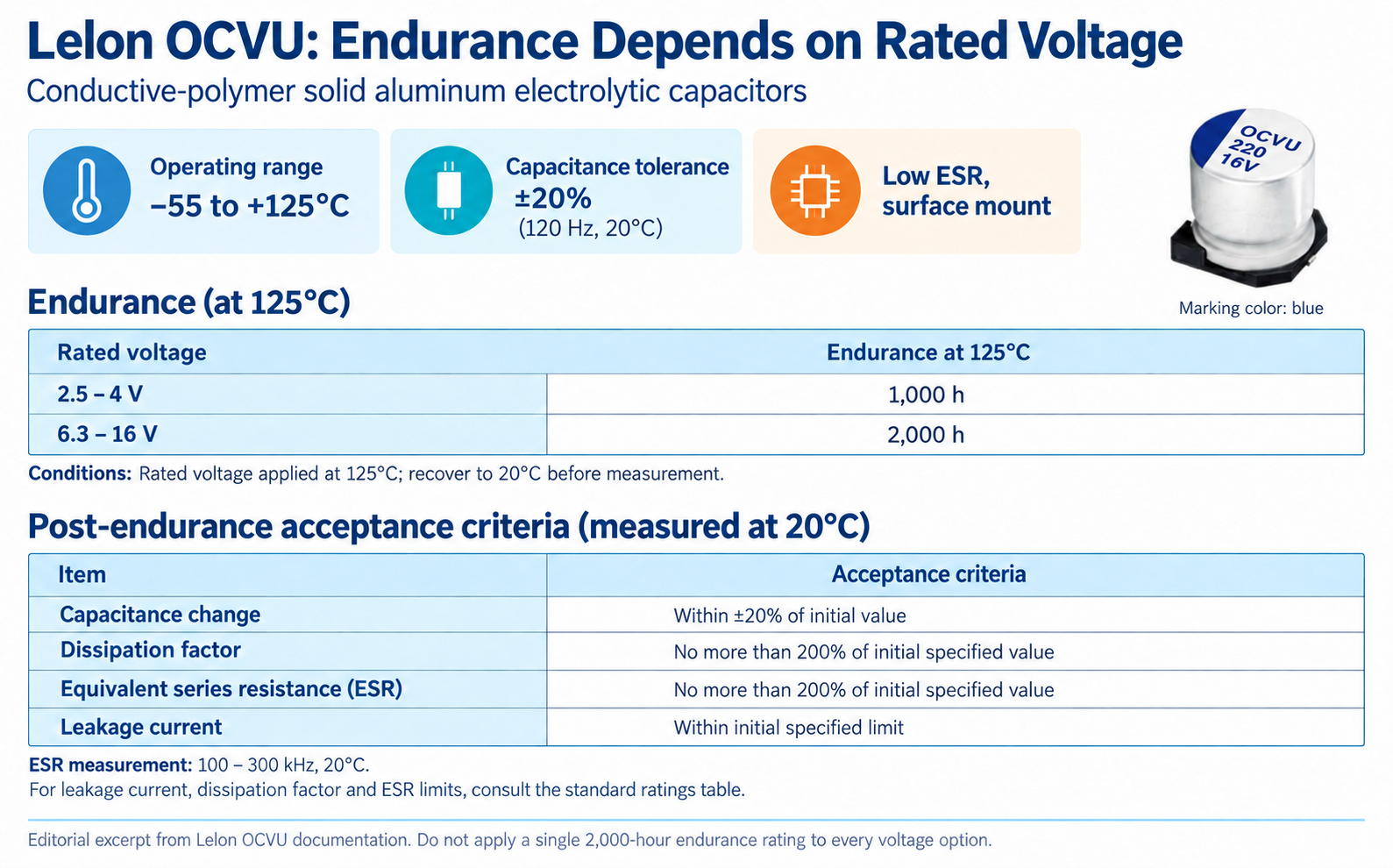
Figure 3. Selected OCVU specifications translated from manufacturer documentation. Endurance duration is divided by rated voltage; this editorial excerpt does not replace the complete datasheet.
This distinction belongs in the selection table. Copying “high temperature, long life” from a series introduction and assigning 2,000 hours to every voltage option changes the stated conditions for the low-voltage parts.
The post-test acceptance limits also deserve attention. OVH and OVB require ESR below 150% of the specified value, while OCVU permits up to 200%. Passing endurance therefore involves different allowable parameter changes across the series. Ranking the hour figures alone misses part of the specification.
Similarly, a 125°C upper operating limit does not mean one ripple-current allowance applies throughout the range. OCVU tables list separate values for temperatures up to 105°C and for above 105°C through 125°C. Use the rating for the applicable interval.
OCVU can be a candidate for a compact board near a heat source, but voltage, ripple and temperature requirements must all be satisfied. The “125°C” label alone cannot complete the selection.
4. Define the task before choosing an OP-CAP series
Start with three requirements. At a power-supply output where ripple and load changes dominate, list ESR, ripple-current rating and frequency conditions. For equipment intended to run for long periods, add endurance conditions and the applicable lifetime model. Where local temperature is high, check the temperature limit first, then the specific ratings under hot conditions.
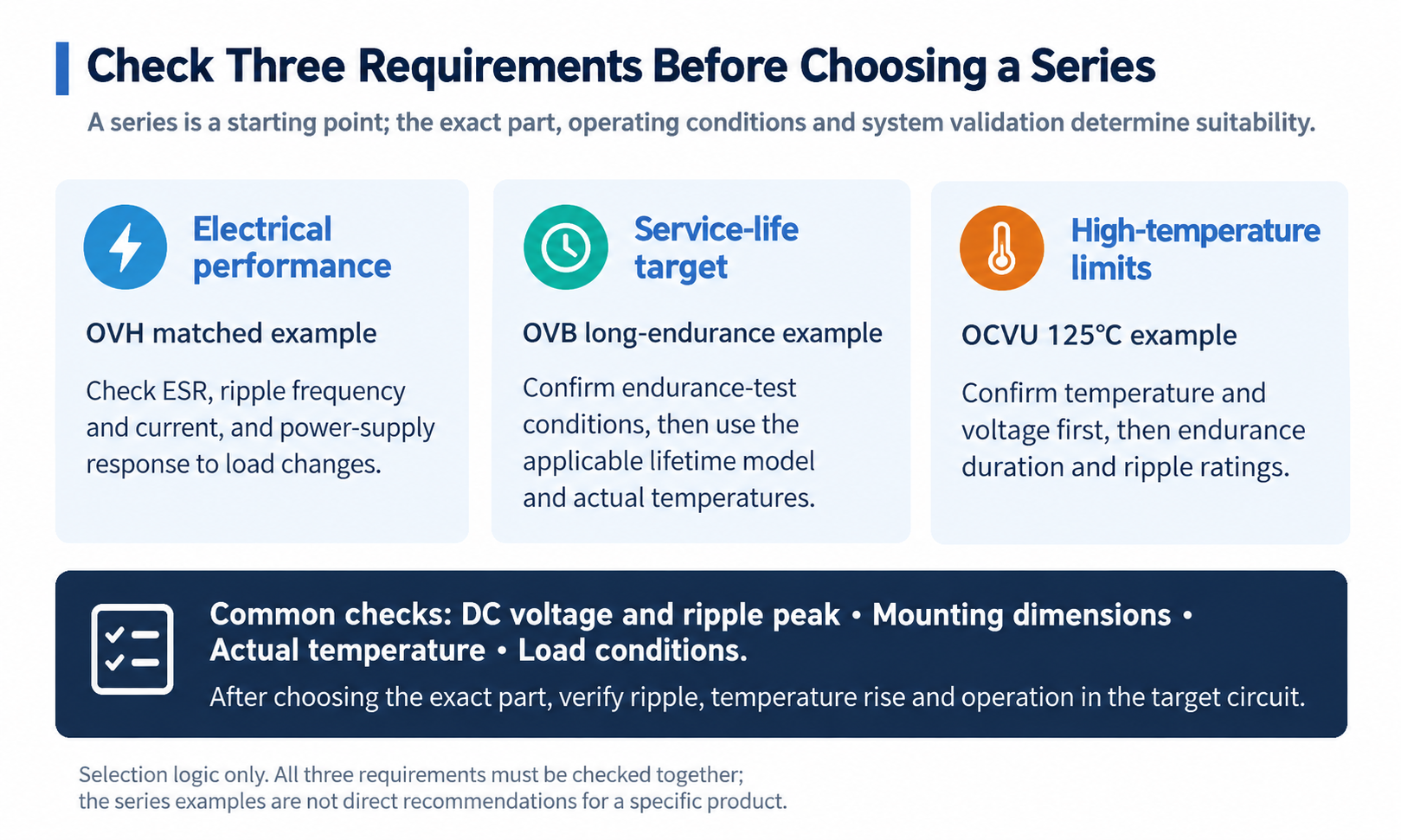
Figure 4. All three requirements need to be checked together. The series are starting points for comparison, not direct component recommendations for a particular product.
These requirements must ultimately be met by the same exact part. Confirm DC voltage and ripple peak, mounting space and actual temperature. After obtaining samples, test output ripple, temperature rise and operation in the intended circuit.
A useful quotation worksheet retains the existing part's operating conditions, the proposed specification and outstanding validation items. The supplier can then respond with more than “solid polymer, suitable replacement,” and engineering can see which parameters match and which need documentation or testing.
OP-CAP is not one undifferentiated solid-capacitor label. OVH, OVB and OCVU express low impedance, long endurance and high-temperature capability through different combinations of specifications. Understanding those differences identifies both the performance needed and the conditions that must be checked.
Based on Lelon manufacturer catalogs and precautions checked as of September 14, 2026. Final selection must follow the applicable specification and manufacturer confirmation.