
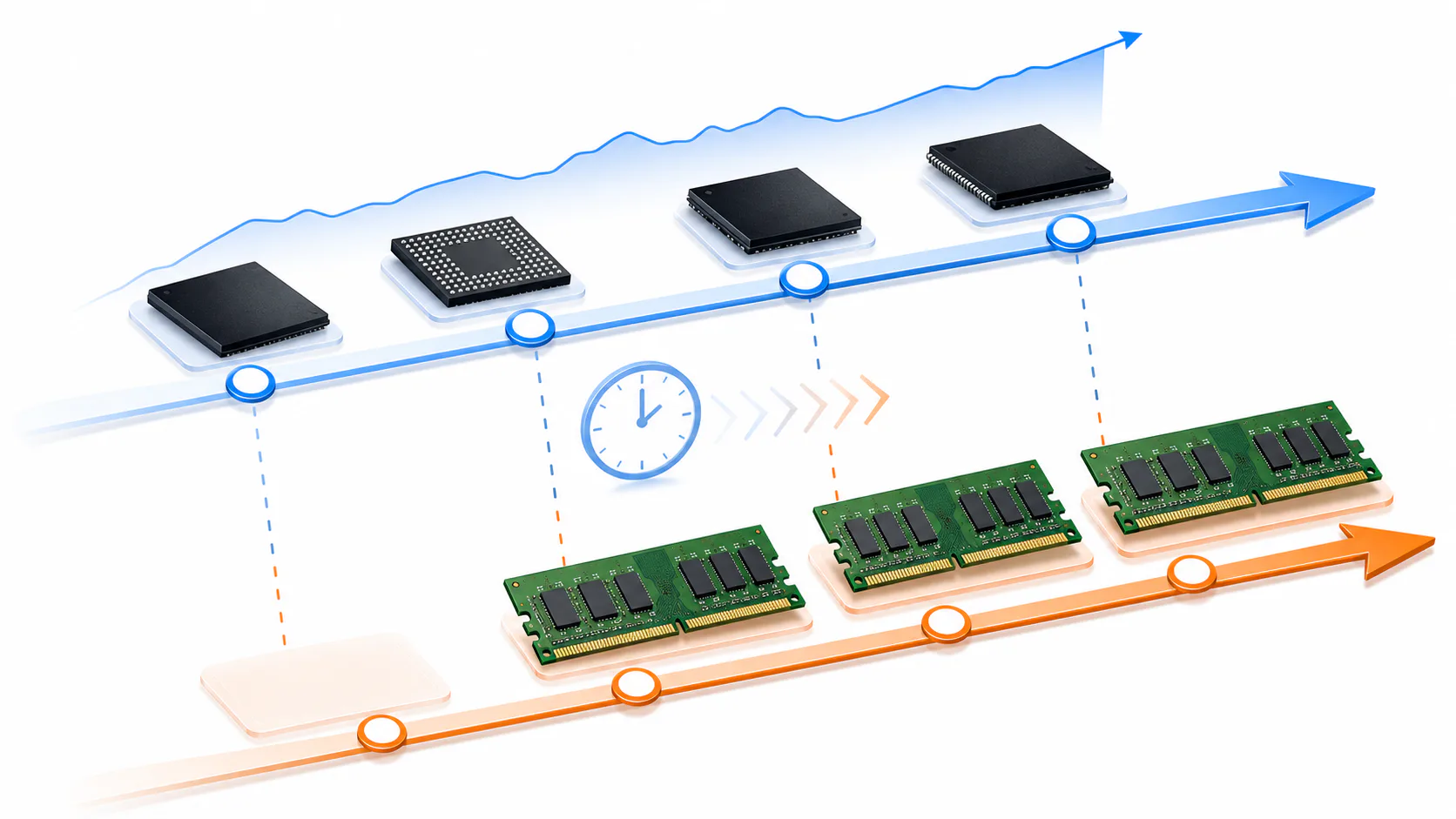
DDR4 module prices do not move in perfect synchrony with bare DRAM. A module producer may consume older low-cost inventory while device prices rise, then reprice later when replacement stock reaches production.
The May 2026 warning that finished modules could continue rising was therefore plausible, but it required separate evidence by module and channel.
A module has its own cost stack
DRAM devices dominate value, but the PCB, SPD device, PMIC where applicable, assembly, testing, heat spreader, brand and warranty also contribute. Density and rank configuration determine which die organization can be used.
A retail DIMM is not a direct proxy for an industrial component. Promotions, consumer inventory and brand positioning can move it independently.
Buyers should identify whether they purchase bare devices, commercial modules, industrial modules or server memory.
Inventory creates a lag
Module makers and distributors hold finished goods and components bought at different costs. During an upturn, old inventory delays price realization. After it is consumed, module prices can increase even if the device spot market stops accelerating.
The reverse occurs in a downturn. High-cost module inventory can hold prices above new component quotes.
Ask for production date, device source, replenishment cost and confirmed delivery rather than inferring from one storefront.
Configuration can create local shortages
DDR4 covers multiple densities, x8 and x16 organizations, speed grades, packages and temperature ranges. A module qualification may allow only specific die revisions or suppliers.
Mature-node capacity reductions can affect one organization more than the category. Industrial and embedded programs often retain older configurations after consumer demand moves on.
Track exact module part numbers and underlying device approvals.
Validate alternatives at system level
An alternate module needs memory training, timing, power, thermal and long-duration workload tests. Server products add error handling, firmware compatibility and fleet qualification.
For industrial supply, confirm lifecycle, BOM control and notification before the module maker changes the DRAM die. A module with an unchanged label can contain a new internal BOM unless the agreement prevents it.
A controlled buying response
Protect modules with single-source device content, long validation or end-of-life exposure. Confirm whether authorized stock is real and whether replenishment dates reflect production.
Avoid applying a retail price spike to every DDR4 position. Compare contract, authorized and spot channels separately and record the capture date.
The procurement conclusion
Finished DDR4 modules can continue repricing after the underlying device market turns because inventory and qualification transmit costs with delay. That does not make every module equally constrained.
Buyers should map the device content, configuration and channel behind the module. The lag is manageable when the internal BOM and inventory layer are visible.
That visibility also prevents a temporary retail promotion from being mistaken for a durable component-market reversal.
This analysis reflects conditions observed in May 2026, not current pricing or availability.